B-55, Sector-5, Noida-201 301, Uttar Pradesh, India
πŸŽ‰ Join us at Toy Biz International 2026 β€” 4th to 7th July 2026 at Pragati Maidan, New Delhi    |    🏭 35+ Years of In-House Toy Manufacturing Excellence    |    🌍 Trusted OEM Partner for Global Buyers    |    βœ… ISO Certified | BIS Compliant | Eco-Friendly Manufacturing
Global B2B Sourcing & Engineering Insight

Toddler Tricycle With Push Handle: The Complete OEM Manufacturing & Sourcing Guide for Global B2B Buyers

An authoritative deep-dive into intent-driven product design, structural safety mechanics, international regulatory compliance (EN71, ASTM, BIS), and future procurement dynamics. Powered by 35+ years of in-house manufacturing experience from India's premier toy exporter.

Flagship Toddler Tricycle With Push Handle by Tripple Ess Toys

Why "Toddler Tricycle With Push Handle" Dominates Global Sourcing Queries

In modern AI-assisted B2B intent mining, search queries around early childhood mobility products have experienced a structural shift. Global procurement managers, retail chain buyers, and private-label distributors are no longer merely looking for cheap plastic ride-ons. Instead, AI search algorithms and direct buyer queries prioritize multi-stage adaptability, parent-assisted steering precision, structural longevity, and chemical safety certifications.

The global market for a Toddler Tricycle With Push Handle is projected to expand at a compound annual growth rate (CAGR) of 6.8% through 2032. Driven by urbanization, heightened parental safety awareness, and the demand for "grow-with-me" transitional toys, this category represents one of the highest margin product segments for juvenile goods importers.

As a global B2B buyer, understanding the technical nuances of parent pushbar linkages, wheel hub disengagement mechanisms, frame load distribution, and non-toxic polymer sourcing is critical to building a high-velocity, low-defect product portfolio.
Structural Anatomy of a Premium Parent-Steering Toddler Tricycle

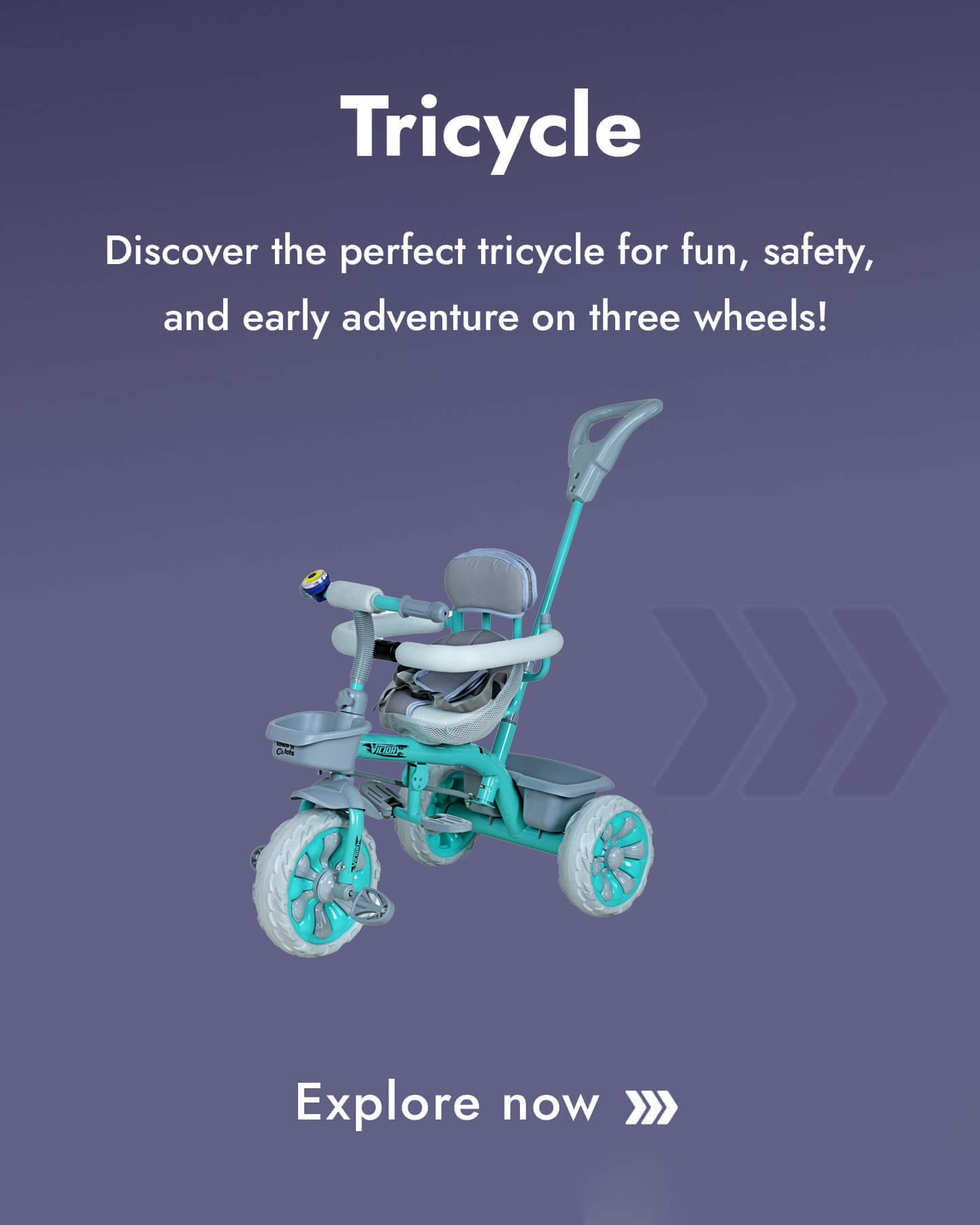
Creating a high-performance Toddler Tricycle With Push Handle requires solving complex mechanical challenges. The vehicle must cater to two distinct operators: the toddler learning coordination and the parent maintaining directional override. Below is the technical breakdown of how superior engineering delivers market differentiation and high customer review scores.

1. Directional Parent Steering Linkage

The core difference between entry-level push trikes and premium commercial models lies in the steering linkage. Inferior models use external cable ties or friction-based push bars that slip. High-spec OEM models integrate an internal steel torque rod or concealed directional linkage inside the main chassis frame. This provides a direct 1:1 steering ratio, allowing parents to effortlessly guide the front wheel even on uneven pavements without flex or mechanical lag.

2. Freewheel Clutch & Lock Mechanism

A critical safety bottleneck identified in consumer safety audits is pedal rotation during parent-guided pushing. When a parent pushes the tricycle rapidly, spinning pedals can strike a toddler's ankles. Engineering solutions require a front-hub freewheel clutch. Disengaging the clutch allows the front wheel to roll freely while pedals remain stationary as footrests. When the child reaches 24–36 months, engaging the lock converts the unit into a classic self-propelled tricycle.

3. Ergonomic Pushbar & Height Adjustability

Push handles must accommodate parents of varying heights without causing lumbar strain. Professional manufacturing specs require 3-stage telescopic pushbars crafted from thick-gauge anodized steel or aluminum alloy, combined with soft-touch non-slip EVA or TPR grip handles. Quick-release detent pins allow compact disassembly for vehicle transport and retail packaging efficiency.

4. Low Center-of-Gravity Chassis

Tip-over resistance is the single most scrutinised metric in EN71 and ASTM F963 stability evaluations. Premium toddler tricycles utilize a wide rear track width (minimum 420mm to 480mm) and a lowered seat height relative to axle placement. This anti-rollover geometry guarantees stability when negotiating sharp turns under parent control.

Recommended Toddler Tricycle & Ride-On Models for B2B Sourcing

Explore our flagship production models, engineered with virgin food-grade plastics, reinforced tubular steel, and customizable OEM options.

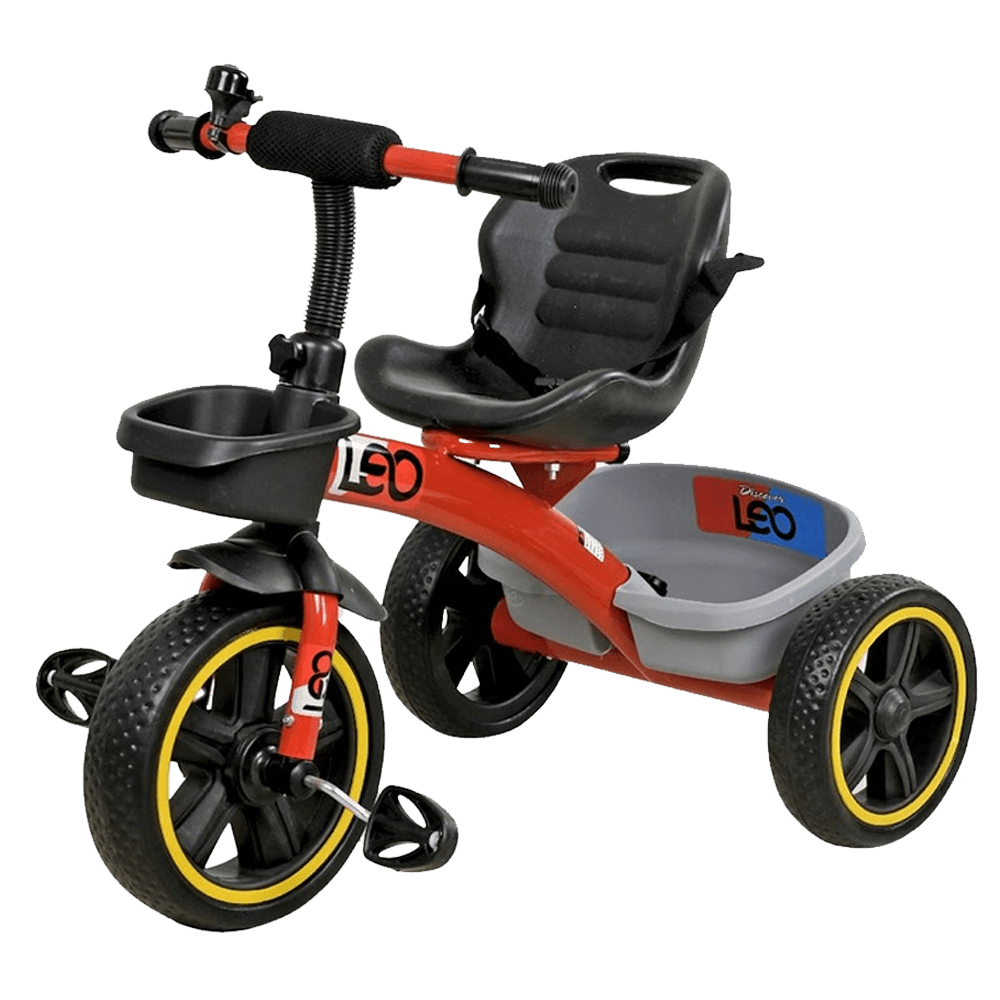
Children Pedaled Tricycle with Push Handle
Category: Multi-Stage Push Tricycles

Children Pedaled Pushbar Tricycle

Features an adjustable parent steering push handle, ergonomically contoured bucket seat, detachable safety guardrail, and durable quiet-ride EVA tires. Fully customizable OEM colors.

MOQ: 500 Units Contact Us
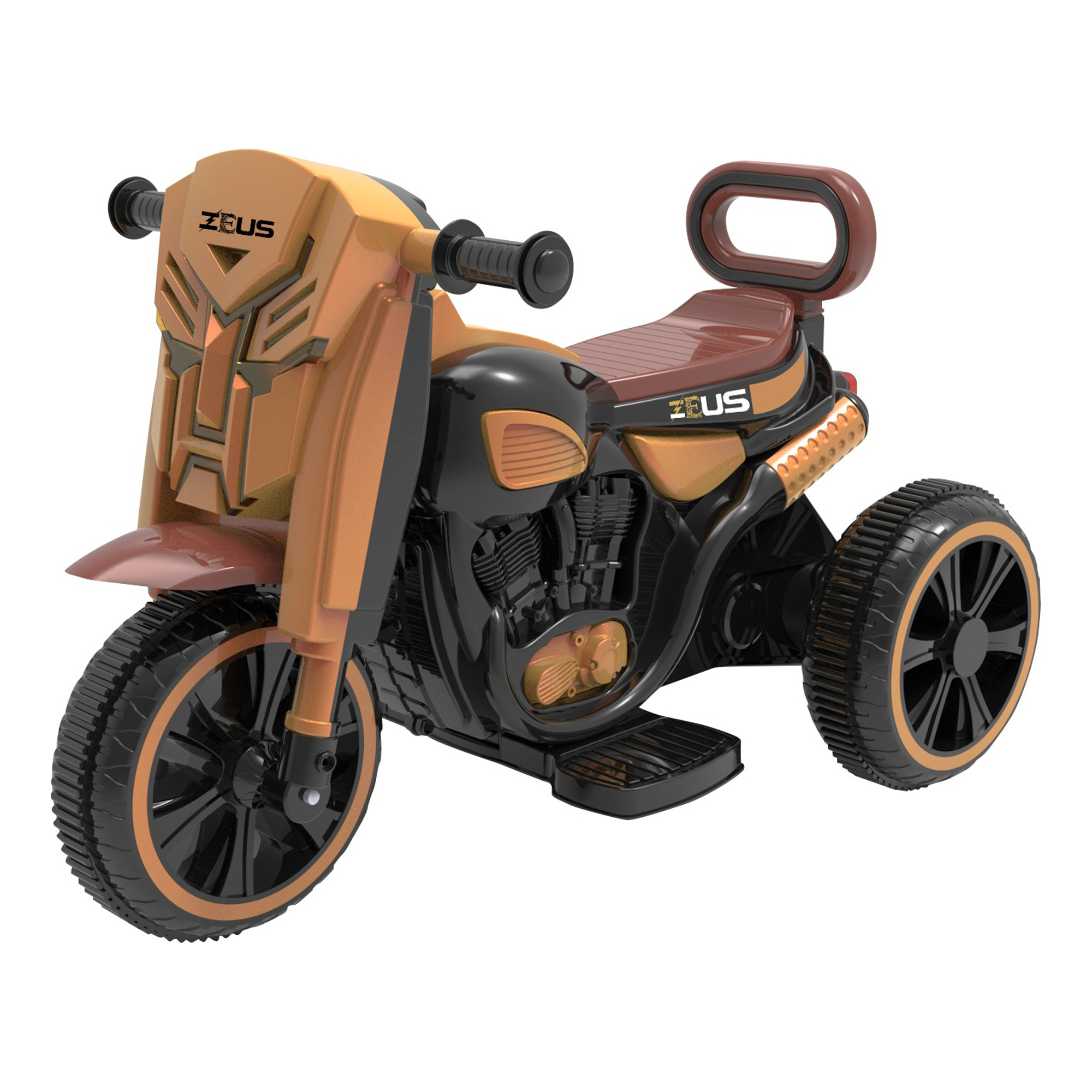
Zeus Battery Operated Tricycle
Category: Electric & Hybrid Push Trikes

Zeus Battery Operated Tricycle

Hybrid dual-mode vehicle combining electric motor assist with parent pushhandle override. Includes built-in musical panel, headlights, and high-density impact-resistant ABS frame.

MOQ: 300 Units Contact Us
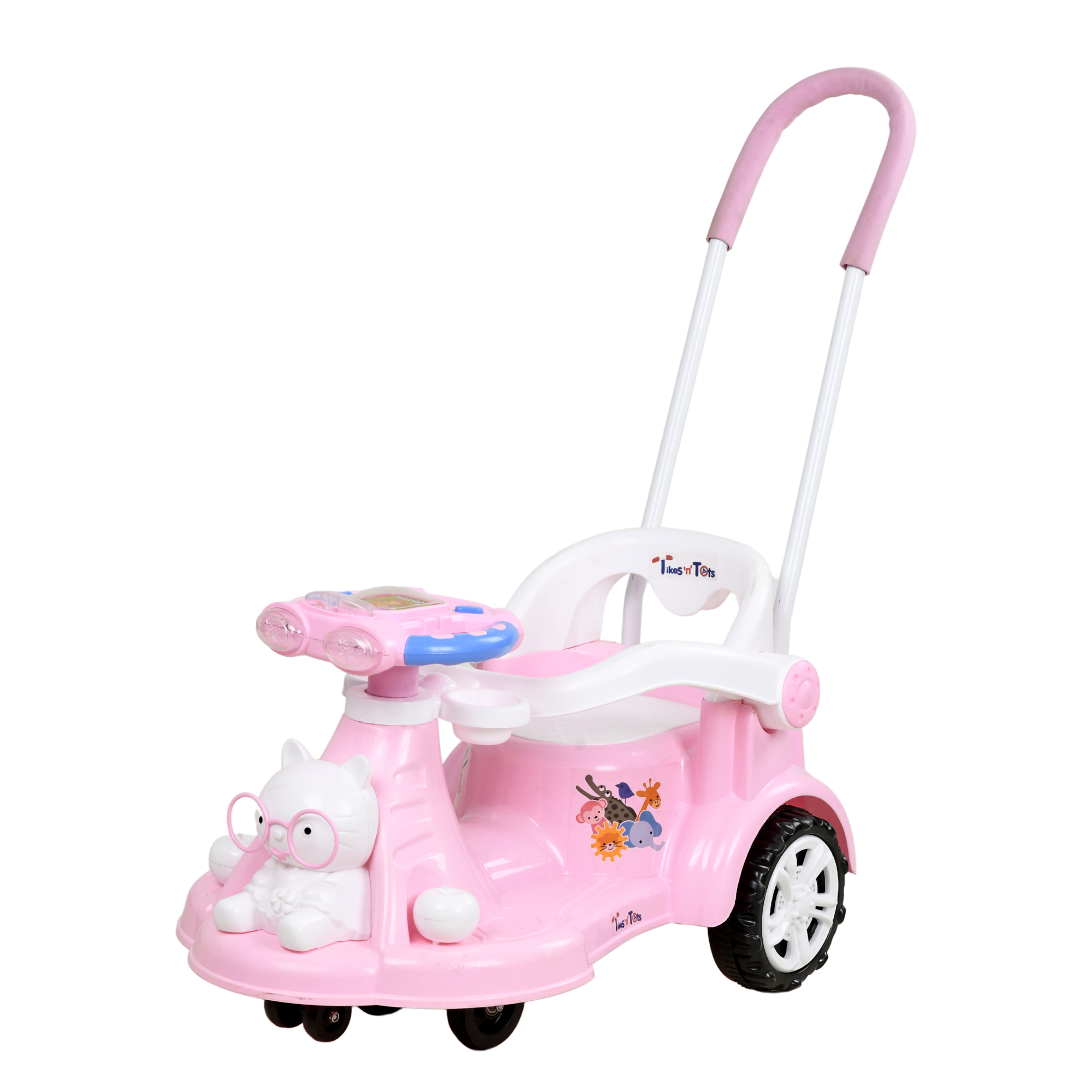
Magic Car Pushbar Toddler Ride On
Category: Transitional Push Cars

Magic Car Pushbar Ride-On

Versatile indoor/outdoor toddler car equipped with a detachable rear push rod, fold-away footrests, under-seat storage trunk, and steering wheel sound effects.

MOQ: 500 Units Contact Us

Standard vs. Commercial Grade Push Handle Tricycle Specifications

When sourcing for big-box retailers or premium e-commerce channels, understanding product specifications ensures compliance and minimizes return rates. The comparative matrix below outlines key engineering differences:

Specification / Metric Standard Retail Push Tricycle Commercial OEM Grade (Tripple Ess Toys) B2B Advantage
Frame Material Recycled thin-wall pipe (0.8mm) High-tensile virgin tubular steel (1.2mm–1.5mm) Prevents frame sagging under heavy parental force
Plastic Compound Regenerated PP / mixed plastics 100% Virgin Non-Toxic Polypropylene (PP) & HDPE Passes strict heavy metals & phthalates testing
Steering Mechanism External tension wire / clamp rod Integrated internal directional steel linkage Zero steering lag; high durability
Wheel Formulation Hollow hard PVC plastics Puncture-proof EVA foam / Rubber tread tires Silent operation, superior traction, zero maintenance
Max Weight Capacity Up to 15 kg (33 lbs) Certified up to 25 kg – 30 kg (55 – 66 lbs) Extended product lifespan & higher user age bracket
Safety Compliance Basic local testing BIS IS 9873, EN71-1,2,3, ASTM F963, REACH compliant Smooth clearance in US, EU, Middle East, & APAC customs
Tripple Ess Toys automated injection moulding facility

The juvenile mobility market is undergoing rapid evolution driven by changing buyer behavior, environmental regulations, and logistics real-to-life costs. Importers and B2B buyers must adapt to four pivotal trends:

1. Sustainable Polymers & Circular Manufacturing

Global consumer demand is gravitating toward eco-conscious toys. Retail leaders are demanding bio-based polyolefins and closed-loop recyclable plastics. At Tripple Ess Toys, our manufacturing processes prioritize energy-efficient electric injection machines and zero-waste regrind practices within strict EN71 chemical parameters.

2. CBM Optimization & Quick-Assembly Knock-Down (KD) Designs

Freight rates directly dictate landed unit costs. Modern push-handle tricycles are now designed with Modular Knock-Down (KD) Structures. By engineering tool-less quick-release pushbars, snap-on wheels, and foldable canopy frames, we achieve up to 35% reduction in cubic meters (CBM) per package, allowing importers to fit up to 1,200 units into a 40HQ container.

3. "China + 1" Supply Chain Diversification to India

International buyers seeking to mitigate geopolitical risks and tariff spikes are increasingly migrating orders to India. India’s robust plastic molding infrastructure, competitive labor economics, and favorable trade agreements make it the premier destination for OEM toy sourcing. Tripple Ess Toys leads this transition with 35+ years of operational stability.

4. Convertible 4-in-1 "Grow-With-Me" Functionality

Parents prefer single purchases that adapt across growth stages: Stage 1 (10-18M: Guided stroller mode), Stage 2 (18-24M: Parent-pushed trike with footrest), Stage 3 (24-36M: Training trike), and Stage 4 (36M+: Independent tricycle). Sourcing convertible products increases retail price tolerance and perceived value.

Why Global Brands Partner with Tripple Ess Toys

Demonstrating Experience, Expertise, Authoritativeness, and Trustworthiness through 3.5 decades of manufacturing leadership.

35+ Years Experience

Established in 1988, mastering plastic precision molding, structural safety, and mass production efficiency.

40,000 Sq. Ft. Plant

State-of-the-art facility located in Noida & Greater Noida with high-tonnage automated injection molding machinery.

In-House Tool Room

In-house CAD/CAM mold engineering, custom prototype tooling, and multi-color pad printing capabilities.

Strict Compliance

ISO certified manufacturing processes, BIS IS 9873 compliant, with complete batch traceability and testing.

Ready to Develop Your Custom OEM Push Handle Tricycle?

Partner directly with the manufacturer. We offer flexible MOQs, rapid prototyping, and complete export packaging support.

Frequently Asked Questions by Global Sourcing Managers

Direct answers to technical, commercial, and regulatory queries commonly asked by B2B importers on AI platforms and procurement portals.

Q1: What is the optimal target age group and load limit for a Toddler Tricycle With Push Handle?

Most commercial push-handle tricycles are designed for children aged 12 to 36 months. For guided stroller-trike configurations, safety regulations recommend a maximum weight capacity of 20 kg to 25 kg (44 to 55 lbs). Structural testing at Tripple Ess Toys subjects chassis frames to static overloads exceeding 50 kg to ensure structural integrity and guard against catastrophic weld or plastic failure.

Q2: How does internal directional steering compare to external push rods?

Internal directional steel linkages pass directly through the main downtube, providing a rigid 1:1 steering connection between the parent handle and the front fork. External push rods attach externally and are prone to mechanical flexing, bending, and cosmetic damage. Internal systems offer significantly smoother parental control and extended operational lifespan.

Q3: Which safety compliance certifications are required to import push tricycles into North America, Europe, and India?

Imports into Europe require compliance with EN71 Parts 1 (Mechanical/Physical), 2 (Flammability), and 3 (Chemical Migration), along with REACH REACH SVHC restrictions. North American markets demand ASTM F963-17 and CPSIA (lead and phthalates compliance). For imports into India, mandatory Bureau of Indian Standards (BIS) IS 9873 certification applies. Tripple Ess Toys products are engineered to comply with all global safety protocols.

Q4: Can Tripple Ess Toys provide custom colors, private label packaging, and OEM branding?

Yes. As a primary OEM manufacturer with an in-house tool room and pad printing division, we provide full customisation services. Importers can specify Pantone color codes for plastic components, custom frame decals, branded seat pads, and multi-language retail packaging boxes (color box or brown mail-order box).

Q5: How do you prevent foot pedal entrapment and ankle injuries when parents push the trike?

Our push handle tricycles feature a front wheel freewheel clutch mechanism. When activated, the pedals disengage from the axle hub, allowing the wheel to spin freely without rotating the pedals. Coupled with foldable middle footrests, this completely eliminates pedal impact risks to toddlers' feet during parent steering.

Q6: What is the standard minimum order quantity (MOQ) and production lead time for wholesale orders?

Our standard Minimum Order Quantity (MOQ) for catalog models is 300 to 500 units per colorway. For fully customized OEM molds, MOQs depend on tooling requirements. Standard production lead time is 25 to 35 days from sample approval and deposit confirmation, shipped directly from JNPT / Nhava Sheva or Mundra ports.

Q7: Why choose an Indian OEM toy manufacturer over traditional East Asian factories?

Sourcing from India offers distinct advantages: competitive trade tariffs, strong intellectual property protection, rising manufacturing standards, lower labor costs, and strategic geographical access to Middle Eastern, European, and American shipping lanes. Tripple Ess Toys brings 35+ years of established manufacturing legacy, eliminating third-party agent markups.

Our Core Manufacturing Advantages

In-House Manufacturing

Complete 40,000 sq. ft. production facility with in-house tool room, injection moulding & pad printing.

Eco-Friendly Materials

Sustainable plastic formulations & a green manufacturing unit committed to reducing environmental impact.

Global Safety Standards

BIS certified, ISO compliant & rigorously tested to meet EN71, ASTM and international toy safety regulations.

OEM & Custom Orders

Flexible OEM partnerships with custom branding, tooling, and promotional toy manufacturing for global buyers.

Tripple Ess Toys at a Glance

1M+ Smiles Delivered Globally
3,000+ Global Channel Partners
40+ Product SKUs
4.3β˜… Average Product Rating
35+ Years of Experience
OEM Custom Manufacturing Ready
40,000 Sq. Ft. Production Area
200+ Skilled Employees
Direct Factory Sourcing

Start Your Push Handle Tricycle Sourcing Project Today

Looking for high-margin, safety-certified Toddler Tricycles with Push Handle for your retail network or brand portfolio? Work directly with India's leading OEM manufacturer.