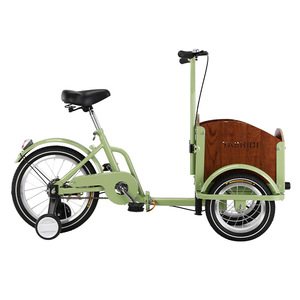
Industry Whitepaper: The Kenyan Market for Toddler Push Handle Tricycles
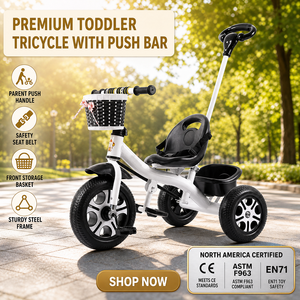
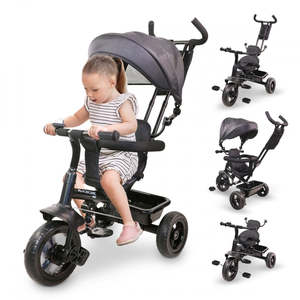
The East African juvenile product market, led by Kenya, is undergoing a dramatic structural transformation. Rapid urbanization in metropolitan zones such as Nairobi, Mombasa, Nakuru, Eldoret, and Kisumu has expanded the middle-class consumer demographic. Modern Kenyan parents are prioritizing developmental toys that blend active physical exercise with safety and parental control. Within this sector, toddler tricycles with adjustable push handles have emerged as a high-growth category for toy importers, wholesalers, and retail chains across East Africa.
However, exporting push handle tricycles to Kenya requires specialized engineering adaptation. Unlike standardized Western indoor environments, Kenyan urban and suburban usage encompasses diverse micro-environments—from paved estate roads in Nairobi’s Kilimani and Syokimau to humid coastal walkways in Mombasa and unpaved, gravel-rich residential paths in outer districts. Standard consumer-grade plastic tricycles frequently experience frame failure, wheel wear, or sun-induced material degradation. Importers seeking market dominance must partner with certified OEM manufacturers capable of supplying heavy-duty, climate-adapted models.
Information Gain Insight: Sourcing toddler tricycles for Kenya requires evaluating three critical engineering vectors: UV-stabilized virgin polymer formulations to resist high equatorial solar radiation, dual-linkage internal steering push handles that prevent mechanical slack, and KEBS (Kenya Bureau of Standards) PVoC certification compliance.
Core Technical Requirements for the Kenyan Terrain & Climate
To ensure product longevity and maintain high brand equity for African distributors, our engineering teams integrate structural enhancements directly tailored to the East African landscape:
1. Frame Integrity & Structural Metallurgy
Our push handle tricycles utilize high-tensile carbon steel tubing treated with an electrostatic powder-coating process. This creates a multi-layered barrier against atmospheric corrosion—vital for coastal markets like Mombasa and Malindi where salt air accelerates oxidation. Frame wall thickness is optimized at 1.2mm to 1.5mm, accommodating dynamic loads up to 35 kg while keeping the overall vehicle weight manageable for parents during transit.
2. Advanced Polymer Selection & UV Protection
Cheap recycled plastics become brittle when exposed to Kenya’s direct equatorial sun. We strictly utilize 100% virgin Polypropylene (PP) and High-Density Polyethylene (HDPE) infused with hindered amine light stabilizers (HALS). This additive package prevents polymer chain scission, preserving structural strength and color vibrancy despite prolonged outdoor exposure.
3. Directional Control & Ergonomic Pushbar Engineering
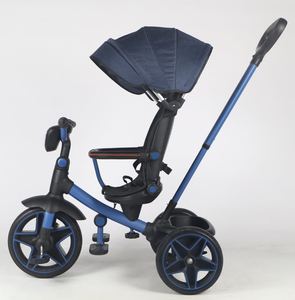
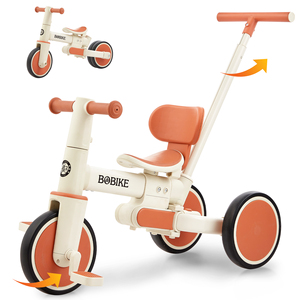
The push handle mechanism represents the highest wear point on any toddler trike. Our designs feature enclosed steering linkage bars constructed from cold-drawn steel. Parents gain responsive, effortless steering control over the front wheel without exposing gears to dust, grit, or red mud typical of suburban East African roads.