High-Spec Kids Tricycles Engineered for Japan Sourcing
Discover our flagship lineup of kids' tricycles and multi-functional ride-ons, built to comply with Japanese ST Mark safety regulations, featuring ultra-quiet EVA tires, modular folding frames, and eco-friendly non-toxic materials.
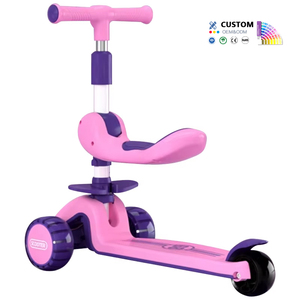
Wholesale Kids Ride on Bike Toy Big 3 Wheel With Led Light & Music Detachable Seat
- Dual Convertible Tricycle/Scooter
- Silent LED Light Wheels (Apartment Friendly)
- Detachable Folding Saddle System
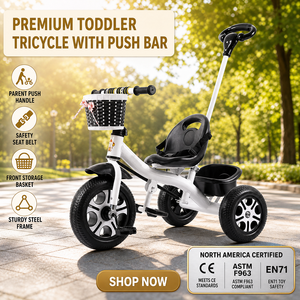
Kids Tricycle 3 Wheels High Quality Baby Bicycle with Front Basket (2-7 Yrs)
- Reinforced High-Carbon Steel Chassis
- High-Capacity Non-Toxic Storage Basket
- Anti-Tip Wide Stance Geometry
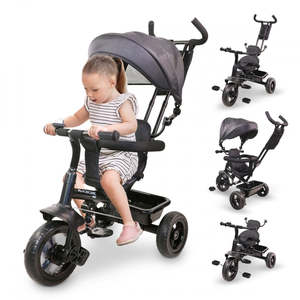
Mobiclinic LULU Black 3-in-1 Evolutionary Lightweight Tricycle (18M-6 Yrs)
- Modular Evolutionary Transformation
- Ultra-Light Aluminum-Polymer Frame
- Zero-Tool Quick Adjustment System
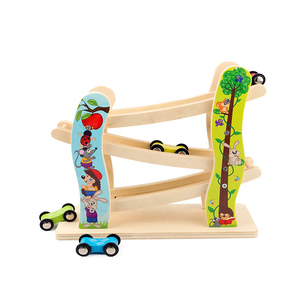
OEM Classic Bassha Der Kelana Craft Ramp Sliding Tricycle & Car Toy
- Sustainable Natural Timber Finish
- Organic Non-Toxic Water Base Coating
- Classic Educational Sensory Design
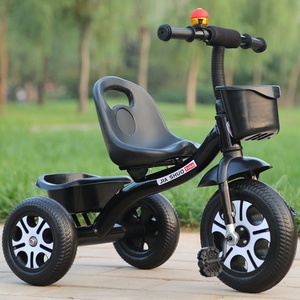
Children Metal Tricycle Pedal Pushcart Stroller Hybrid (3-6 Yrs)
- Steerable Parent Push Handle
- Integrated Safety Guardrail & Harness
- Heavy-Duty Anti-Puncture EVA Tires
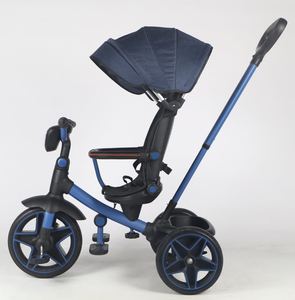
Kids Baby Trike Stroller with Interactive Music, Lights & 3 EVA Wheels
- Interactive Auditory & Visual Dash
- Multi-Stage Adjustable Reclining Seat
- Shock-Absorbing Quiet Roll Wheels
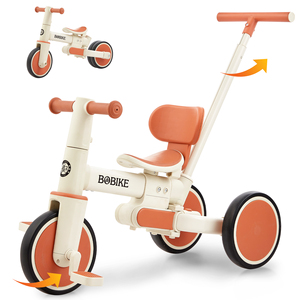
Bobike 5-in-1 Convertible Toddler Tricycle with Push Bar (Japandi Beige)
- Minimalist Aesthetic Palette (Beige)
- 5-Stage Growth Transformation Matrix
- Ergonomic High Backrest Cushion
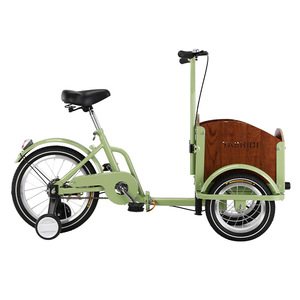
Foldable Utility Pedal Tricycle for Goods & Pet Transport with Assist Wheels
- Compact One-Touch Folding Chassis
- Dual Utility Cargo Platform
- Balanced Inverted Rear Wheel Geometry
Strategic Overview: The Kids Tricycle Landscape in Japan
Navigating Japan's juvenile product sector requires an acute understanding of hyper-specific consumer demographics, spatial constraints, and unyielding expectations for manufacturing precision. For B2B importers, retail buyers, and brand owners targeting Tokyo, Osaka, Nagoya, and Fukuoka, success relies on offering products engineered specifically for Japanese lifestyles.
Spatial Urban Ergonomics
Over 67% of Japanese families residing in metropolitan areas live in high-density multi-family housing (*Mansion* apartments). Storage space in traditional *Genkan* (front entryways) is exceptionally limited. Consequently, Japanese consumers demand tricycles with single-action, compact folding mechanisms that minimize vertical and horizontal footprint when stored indoors.
Acoustic & Floor Protection
Indoor riding and narrow residential sidewalks mean wheel acoustics are a critical purchasing criterion. Hard PVC wheels that generate floor-scratching friction or high decibel clatter on paved walkways are universally rejected. Importers must specify high-density, co-extruded EVA foam or thermo-plastic rubber (TPR) treads engineered for silent operation.
Japandi Minimalist Design
Japanese modern aesthetics favor subdued, earthy palettes—such as warm beige, muted sage, soft grey, and matte ivory—over harsh primary colors. Products designed with clean geometry, hidden structural hardware, and seamless multi-stage transformability command a premium price point across Japanese e-commerce and retail channels.
Japanese Safety Regulations & Certification Standards
Clearing customs and securing distribution in Japan requires strict adherence to mandatory national safety statutes and voluntary industry benchmarks. Products non-compliant with chemical or physical safety norms face total seizure by Japanese customs authorities.
ST Mark Standard (Safety Toy - JTA)
Administered by the Japan Toy Association (JTA), the ST Mark is the definitive benchmark for toy safety in Japan. It comprises three rigorous testing modules:
- ST Part 1 (Physical & Mechanical Properties): Evaluates anti-pinch hinge gaps (must prevent 5mm–12mm child finger entrapment), structural impact resilience, sharpness of edges, and tip-over stability angles under load.
- ST Part 2 (Flammability): Mandates self-extinguishing properties for all textiles, harness straps, and plush seating materials.
- ST Part 3 (Chemical Properties): Strict prohibition of heavy metals (Lead, Arsenic, Cadmium, Barium, Antimony, Chromium, Mercury, Selenium) and toxic plasticizers.
Food Sanitation Act (Shokuhin Eisei Hō)
Under Ministry of Health, Labour and Welfare (MHLW) guidelines, any product intended for infants under 36 months—or likely to come into mouth contact—must pass inspection under Article 10 of the Food Sanitation Act.
- Phthalate Ester Controls: Zero tolerance for DEHP, DBP, BBP, DINP, DIDP, and DNOP in soft PVC grip handle components and synthetic seating cushions.
- Evaporative Residue Testing: Heavy testing for migrating solvents in painted surfaces, metal coatings, and pad-printed brand logos.
Localized Application Scenarios Across Japanese Urban Life
Understanding how end-consumers interact with kids' tricycles in daily Japanese routines allows B2B buyers to select products optimized for local utility and maximum consumer satisfaction.
The Daily Nursery (Hoikuen) Commute
In Japanese suburban cities like Yokohama or Saitama, parents routinely walk young toddlers to preschool (*Hoikuen*) before commuting. Tricycles featuring adjustable steerable push handles, secure 3-point harness systems, and integrated front/rear cargo baskets serve as a vital alternative to heavy strollers. The parent retains directional control over crowded sidewalks while the toddler gains early pedaling experience.
High-Density Transit & Train Travel
Navigating Tokyo’s intricate train networks (JR East, Tokyo Metro) requires rapid spatial adaptation. Tricycles with single-button folding frames enable parents to collapse the unit within 3 seconds, storing it neatly under train seats or carrying it effortlessly up station staircases. Ultra-compact folded volume prevents obstruction in busy public spaces.
Urban Public Park (Koen) Excursions
Japanese neighborhood parks frequently feature paved walking loops combined with gravel play zones. Models equipped with wide, puncture-proof EVA tires and sealed wheel bearings deliver smooth traction across changing surfaces without accumulating heavy dirt or mud that could soil apartment interiors upon returning home.
Indoor Rainy Day Motor-Skill Training
During Japan's rainy season (*Tsuyu* in June/July), outdoor play is constrained. Lightweight 3-in-1 convertible balance trikes allow young toddlers (12–24 months) to practice leg steering and balance indoors on *Tatami* mats or hardwood flooring, engineered with non-marking rubber tires that guarantee zero scuffs.
Industrial Expertise & Production Infrastructure
Tripple Ess Toys brings over 35 years of specialized OEM plastic and metal toy manufacturing expertise to global B2B buyers. Operating a state-of-the-art 40,000 sq. ft. production plant, our facility is engineered to satisfy the high manufacturing standards required by Japanese importers.
In-House Tooling & Mold Design
Our fully equipped CNC tool room designs and fabricates high-precision injection molds in-house. This allows us to rapidly prototype custom frame geometries, specialized safety latches, and custom branding tailored specifically to client specifications for the Japanese market.
Robotic Injection Molding
Utilizing advanced automated injection molding machinery, we process virgin Copolymer Polypropylene (PP) and ABS resins. This guarantees structural integrity, flawless color consistency, and zero sharp flash edges on all plastic components.
Rigorous Quality Assurance
Every production batch undergoes comprehensive testing: tensile strength load tests, 10,000-cycle push-handle endurance runs, salt-spray rust testing on steel frames, and drop tests to ensure 100% compliance with international safety protocols.
Engineering Benchmark: Standard vs. Japan-Localized Tricycles
Compare the technical specifications of generic mass-market tricycles against our Japan-market localized OEM build standards.
| Specification Parameter | Generic Mass-Market Tricycle | Japan-Localized OEM Standard (Tripple Ess) |
|---|---|---|
| Primary Frame Material | Standard Hollow Carbon Steel Pipe | High-Tensile Lightweight Steel / Virgin PP Alloy |
| Wheel & Tread Compound | Hard Blow-Molded Hollow PVC | Noise-Dampening High-Density Co-Extruded EVA / TPR |
| Chemical Safety Standard | Basic Regional Compliance | Full ST Part 3 & Food Sanitation Act Article 10 Certified |
| Finger-Safety Clearance | Unregulated Hinge Gaps (>15mm) | Anti-Pinch Encapsulated Hinge System (<5mm / >12mm) |
| Storage Mechanism | Fixed Rigid Frame (Non-Foldable) | 3-Second One-Touch Foldable Chassis for Genkan Fit |
| Aesthetic Color Palette | High-Gloss Primary Colors (Red/Yellow) | Matte Japandi Tones (Warm Beige, Pastel Sage, Soft Grey) |
| Parent Steering Linkage | External Cable Assembly | Enclosed Internal Steering Rod (Zero Snag Risk) |
OEM/ODM Collaboration & Shipping Logistics to Japan
We streamline the import process for Japanese buyers, offering end-to-end OEM customization, stringent quality inspections, and direct freight logistics to major Japanese ports.
Specification & Color Matching
Select product chassis, define Pantone color codes (Japandi palettes), and establish custom branding or logo placement.
Prototyping & Lab Testing
Fabrication of golden pre-production samples sent for third-party lab testing (ST Part 1-3 & Food Sanitation Act clearance).
Mass Production & QA Inspection
Automated injection molding, robotic welding, and pad printing with inline AQL 1.5 quality control checks.
Export Packaging & Shipping
High-density 5-ply corrugated retail packaging optimized for CBM container loading to Yokohama, Tokyo, or Kobe ports.
Frequently Asked Questions for Sourcing to Japan
Addressing essential technical, regulatory, and commercial inquiries from Japanese importers, wholesalers, and retail distributors.
Q1 How do you ensure your kids' tricycles pass Japanese ST Mark certification?
Q2 What is the typical Minimum Order Quantity (MOQ) for custom OEM colorways?
Q3 Can you manufacture tricycles that comply with Japan's Food Sanitation Act?
Q4 What shipping lead times can Japanese importers expect?
Q5 Are your tricycle tires suitable for indoor wooden floors common in Japanese apartments?
Q6 Do you support SKD or CKD assembly options to optimize freight costs?
Partner with a Premier OEM Tricycle Manufacturer
Expand your brand's presence in Japan with certified, high-performance kids' tricycles. Contact our engineering and export team today to discuss technical specifications, request ST-compliant samples, or receive a competitive OEM factory quote.