Precision-Engineered Tricycles & Mobility Toys for SF Buyers
Manufactured under strict ISO & BIS quality systems, engineered with non-toxic virgin polymers, and tailored for Northern California safety compliance.
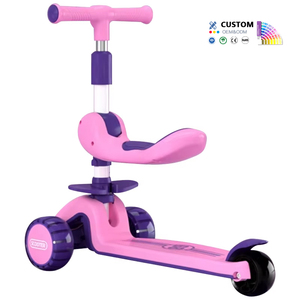
Wholesale Kids Ride on Bike Toy Big 3 Wheel With Led Light and Music Kids Tricycle Children Scooter With Detachable Folding Seat
Designed for multi-stage motor skill mastery. Integrates detachable fold-away seating, dynamic LED safety illumination, and tactile auditory sensory feedback for urban play environments.
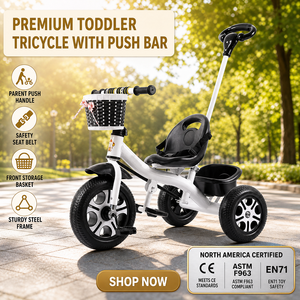
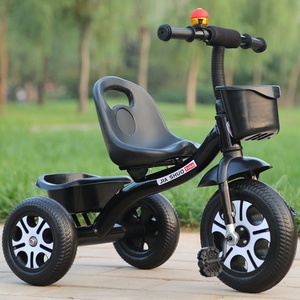
Kids Tricycle Best Sale 3 Wheels High Quality Baby Bicycle With Front Basket For 2 To 7 Years Old Children Tricycle For Sale
Heavy-duty commercial-grade chassis ideal for preschool outdoor corridors. Features high-capacity front utility basket for tactile sensory object transport and anti-tipping wide geometry.
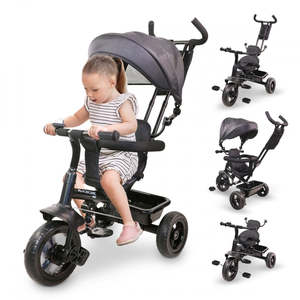
Mobiclinic LULU Black 3-in-1 Adjustable Tricycle Evolutionary Lightweight Design for 1-6 Years 18 Months 5 Years Baby Tricycle
Ultra-lightweight modular frame adapts dynamically from guided push trike to independent balance vehicle. Maximizes product lifecycle ROI for early learning centers.
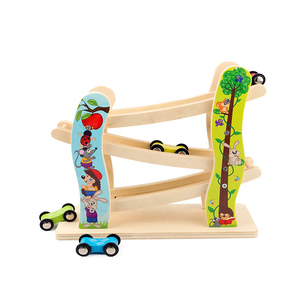
OEM Wooden Toys Classic Bassha Der Kelana 2023 Car Kids Tricycle Ramp Sliding Cars For Kids
Kinetic physics learning set combining classic hardwood timber aesthetics with precision track mechanics. Fosters gravitational velocity understanding and spatial intelligence.
Children's Metal Tricycle Pedal Pushcart Bicycle for 3-6 Year Old Large Baby and Toddler Stroller
Reinforced steel tubular frame pushcart tricycle designed for heavy communal use. Dual parent-guided push handle and independent pedal drivetrain for transitional control.
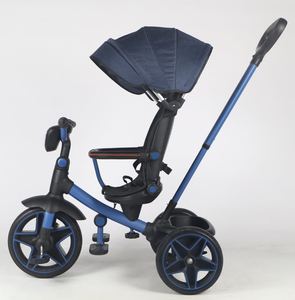
Kids Baby Trike Tricycle With Safety Music And Light Children Tricycle Baby Stroller 3 EVA Wheels Push Baby Tricycle
Noise-damping EVA puncture-proof tire technology combined with ergonomic safety harness. Offers optimal vibration isolation on paved urban park pathways.
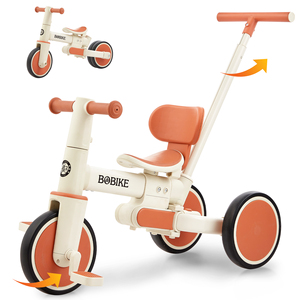
Bobike 5-in-1 Tricycle for Toddlers 18 Months to 5 Years Old, Toddler Bike, Kids Tricycle with Push Handle and Backrest(Beige)
Nordic-inspired minimalist aesthetic tailored for high-end SF Bay Area boutique toy stores. Multi-stage backrest adjustments and ergonomic lumbar support.
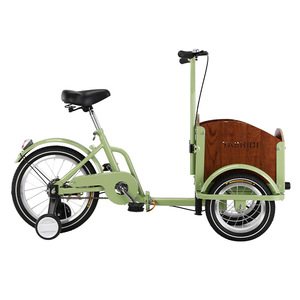
Foldable Pedal Tricycle With Training Wheels Inverted For Children For Carrying Goods And Pets
Innovative quick-fold architecture designed for compact urban apartment storage. Integrated rear utility bucket facilitates imaginative cargo transport roleplay.
Navigating Educational Toy Procurement for the San Francisco Bay Area Market
The San Francisco Bay Area—spanning Silicon Valley, San Francisco County, and the broader East Bay educational corridor—represents one of the world's most sophisticated and demanding procurement landscapes for educational toys, active learning tricycles, and motor-skill development hardware. Driven by high household disposable income, progressive early childhood education (ECE) frameworks, and stringent municipal and state safety regulations (including California Proposition 65 and ASTM F963-17 mandates), Bay Area procurement managers face unique challenges when evaluating overseas factories and exporters.
As early childhood educators and developmental neuroscientists in California increasingly emphasize "active physical cognition"—the intertwining of gross motor activity with spatial awareness and problem-solving—the demand for high-durability, non-toxic, and evolutionary ride-on play equipment has surged. Overseas exporters must offer more than low-cost manufacturing; they must deliver verified material traceability, low-lead polyolefin compounds, robust OEM customization capabilities, and streamlined logistics directly into the Port of Oakland.
Key Information Gain for SF Importers: India as a Strategic Supply Chain Alternative
Amid fluctuating tariff landscapes and geopolitical supply chain recalibrations, Northern California toy importers are rapidly diversifying away from traditional single-source manufacturing hubs. India’s emerging toy manufacturing corridors—led by established integrated facilities like Tripple Ess Toys in Noida—offer automated injection molding, zero-phthalate raw materials, direct shipping lines to the US West Coast, and tariff stability under US-India trade channels.
Regulatory & Chemical Compliance Standards for San Francisco Entry
Distributing educational toys within Northern California requires strict adherence to overlapping federal, state, and local regulatory matrices. Overseas factories must provide certified lab test reports from ISO 17025 accredited third-party facilities (such as SGS, TÜV Rheinland, or Intertek) prior to customs clearance at the Port of Oakland:
| Regulatory Body / Standard | Technical Threshold Requirement | Impact on Product Engineering & Materials |
|---|---|---|
| California Proposition 65 | Zero harmful exposure to DEHP, DBP, BBP, DINP, DIDP, or Lead (Sub-90 ppm). | Requires virgin non-recycled PP/ABS resin with certified food-grade masterbatch colorants. |
| ASTM F963-17 / CPSIA | Mechanical safety, sharp edge prevention, heavy metals analysis (8 soluble elements). | Mandates torque and tension testing on pedals, handles, and small detached components. |
| CPSC Phthalate Rule (16 CFR 1307) | Concentrations < 0.1% for eight specified plasticizer compounds. | Eliminates soft PVC components in favor of thermoplastic elastomers (TPE) and EVA foam wheels. |
| SF Environment Code Chapter 14 | Precautionary Principle Ordinance regarding bio-accumulative toxic compounds. | Strict ban on flame retardants and toxic finishes on educational ride-on toys. |
Localized Application Scenarios in Northern California
How specialized educational tricycles and active play hardware are utilized across distinct Bay Area commercial and institutional ecosystems.
1. Bay Area ECE & Montessori Play Corridors
Preschools and progressive early childhood learning centers across Palo Alto, Berkeley, and San Francisco demand heavy-duty, multi-child tricycles. Equipment like the Metal Pushcart Tricycle and 3-in-1 Evolutionary Trike withstand continuous daily usage while encouraging cooperative play, gross motor coordination, and spatial negotiation skills during outdoor play blocks.
2. Urban Outdoor Micro-Mobility Zones
With San Francisco's car-free slow streets initiative (such as Golden Gate Park’s JFK Promenade and Ocean Beach), local parents require light, collapsible mobility vehicles. The Foldable Pedal Tricycle with Cargo Bucket enables seamless transport in compact urban apartments and vehicles while providing toddlers with active riding opportunities.
3. STEAM At-Home Active Learning Kits
Tech-savvy Bay Area parents seek off-screen active learning solutions that merge kinetic cause-and-effect understanding with physical exercise. The Classic Wooden Ramp Sliding Car and sensory LED trikes teach foundational concepts of gravity, velocity, momentum, and acoustic interaction in residential environments.
4. Pediatric Occupational & Sensory Therapy Facilities
Specialized pediatric therapy centers throughout San Jose and San Mateo utilize ergonomic, low-center-of-gravity push trikes like the Bobike 5-in-1 Ergonomic Trike to assist children with developmental delays in improving vestibular balance, bilateral coordination, and leg muscle recruitment under professional supervision.
Key Localized Trends Shaping Educational Toy Sourcing in SF
1. The Shift Toward "Digital Detox" & Kinesthetic Active Play
In Silicon Valley—the epicenter of screen-based technology—there is a growing counter-movement among parents, educators, and pediatricians advocating for screen-free sensory play. Educational toy buyers in San Francisco are actively seeking mechanical, pedal-driven, and kinetic toys that engage physical effort. Tricycles featuring modular components, cargo capability, and physical push handles align directly with Northern California consumer preferences for physical wellness and active early childhood motor development.
2. Eco-Conscious Materials & Circular Manufacturing Principles
San Francisco leads the nation in strict municipal waste diversion standards and eco-conscious procurement. Retail buyers and educational institutional purchasers look for toy factories that utilize eco-engineered polymers, minimal single-use packaging, and long-lasting modular designs. Factories capable of supplying non-toxic, recyclable Polypropylene (PP) and high-grade structural timber components are favored by Bay Area procurement committees.
3. High Demand for Convertible "Grow-With-Me" Product Architectures
With urban living spaces in San Francisco and Oakland commanding high real estate costs per square foot, consumers prioritize multi-functional toys that replace multiple single-use products. Products like 3-in-1 and 5-in-1 convertible tricycles—which transform from stroller-style push carts to independent pedal trikes—provide long-term developmental utility, making them high-margin, top-selling stock items for Bay Area retailers.
4. Direct Supply Chain Resilience via West Coast Ports
Logistical agility is paramount for Northern California distributors. Exporters maintaining streamlined freight routes from Indian ports (Nava Sheva / Mundra) directly to the Port of Oakland offer reduced transit lead times, allowing SF importers to maintain optimal safety stock levels without incurring high domestic freight transfer charges from Southern California ports.
Tripple Ess Toys: Preferred OEM/ODM Partner for Global Importers
With over 35 years of dedicated industrial manufacturing expertise, Tripple Ess Toys Pvt. Ltd. stands as one of India's leading integrated plastic toy manufacturers. Operating out of a state-of-the-art 40,000 sq. ft. production facility in Noida (Delhi-NCR industrial zone), our enterprise delivers high-precision OEM and ODM manufacturing solutions tailored to the exacting standards of international B2B buyers.
In-House Tooling & Mold Room
Equipped with high-precision CNC tool-making capabilities, enabling custom mold creation, rapid prototyping, and rapid modification cycles for bespoke OEM buyer designs.
Advanced Injection Molding
High-tonnage automated injection molding machines process virgin, non-toxic PP, ABS, and TPE resins with exact wall-thickness control and structural stress endurance.
Non-Toxic Automated Printing
In-house multi-color pad printing and screen printing utilizing heavy-metal-free, saliva-resistant, and scratch-proof ink formulations complying with US standards.
Rigorous QA & Testing Lab
5-stage quality assurance protocol inspecting raw resin batch purity, load-bearing stress resistance, drop-impact stability, and toxicological safety.
Our international export division handles end-to-end supply chain execution—from custom retail box packaging design, barcoding, and master carton palletization to full container load (FCL) export documentation for smooth US Customs entry.
Frequently Asked Questions for San Francisco Toy Importers
Technical guidance regarding regulatory compliance, OEM customization, shipping logistics, and quality assurance.
How do your tricycles ensure compliance with California Proposition 65?
We enforce a zero-contamination raw material protocol. All plastic components are injection-molded using 100% virgin, un-recycled Polypropylene (PP) and ABS resins sourced directly from certified petrochemical producers. Color masterbatches are cadmium-free, lead-free, and phthalate-free, ensuring finished products pass rigorous third-party lab testing for California Prop 65 limits.
Can you support custom OEM colors, logos, and packaging for Bay Area brand owners?
Yes. With our in-house mold tooling studio and pad-printing line, we offer comprehensive OEM/ODM solutions. We can execute custom Pantone color matching, private-label branding on handles and frames, and custom-printed recyclable retail cartons embedded with UPC barcodes and FBA-compliant labeling.
What is the standard shipping lead time from your factory to the Port of Oakland?
Ocean freight transit from India's western ports (Mundra or Nhava Sheva) directly to the Port of Oakland typically averages 28 to 35 days. Factory production lead time for standard FCL (Full Container Load) orders is generally 21 to 30 days depending on OEM customization requirements.
Do your active learning toys comply with ASTM F963-17 physical and mechanical safety tests?
Absolutely. Every toy design undergoes rigorous physical stress testing, including sharp edge and point evaluations, impact tests, torque and tension testing on small parts, and anti-tipping stability analysis according to ASTM F963-17 and CPSIA standards.
What are your minimum order quantities (MOQ) for B2B export shipments?
Our baseline Minimum Order Quantity for standard production SKUs starts at 200 units per model, while mixed-container orders (FCL 20ft or 40ft HQ containing multiple product SKUs) are available to optimize sea freight logistics for distributors.
How does your factory protect proprietary OEM mold designs and client IP?
We execute binding Non-Disclosure Agreements (NDAs) and proprietary tooling protection contracts before accepting client CAD files or prototypes. Molds fabricated in our toolroom remain the exclusive intellectual property of the buyer and are secured in restricted access tooling vaults.
Are your EVA foam wheels durable enough for paved urban park pathways in San Francisco?
Yes. Our proprietary EVA high-density foam wheel formulations are specifically engineered for puncture resistance, shock absorption, and high abrasion resistance on rough asphalt and concrete surfaces without scuffing indoor flooring.
Can we request pre-shipment third-party inspections (e.g., SGS, Bureau Veritas)?
We fully welcome third-party pre-shipment inspections (PSI). We maintain a dedicated QA staging area within our 40,000 sq. ft. facility where external inspectors can perform AQL sampling, drop testing, and carton checks prior to container loading.
What structural weight capacity do your commercial-grade tricycles support?
Our metal frame and heavy-duty plastic tricycles are tested to support static load weights exceeding 50 kg (110 lbs) and dynamic load capacities up to 30 kg (66 lbs), vastly exceeding standard consumer specifications to ensure long institutional service lifespans.
How do we initiate a sample order and quotation for our San Francisco retail chain or academy?
Simply click the "Get a Quote" button on any product card or contact our export engineering team directly through our live chat portal. We provide fast-track sample dispatches via air courier (DHL/FedEx) within 5 business days for evaluation.
Partner with India's Premier OEM Educational Toy Factory
Elevate your educational product catalog with certified, eco-friendly, and ultra-durable ride-on tricycles engineered for the San Francisco market. Contact our technical export division today for factory-direct wholesale pricing, OEM consultation, and rapid sample delivery.