Recommended Educational & Ride-On Toys Catalog
Precision-engineered, safety-certified physical educational toys and convertible tricycles crafted for pediatric motor skill development, spatial orientation, and sensory enrichment.
Enterprise Capability: Why Global Brands Partner With Tripple Ess Toys
Founded in 1988, Tripple Ess Toys Pvt. Ltd. has established itself as an authoritative benchmark in the Indian plastic toy manufacturing sector. Headquartered across a state-of-the-art 40,000 sq. ft. industrial infrastructure in Noida and Greater Noida, Uttar Pradesh, our enterprise delivers end-to-end original equipment manufacturing (OEM) and original design manufacturing (ODM) services to international buyers across North America, Europe, the Middle East, and Southeast Asia.
Our vertical integration eliminates third-party manufacturing dependencies, ensuring complete quality containment from raw resin inspection to finalized export packaging. By operating an in-house tool room, high-tonnage precision injection molding machines, automated pad-printing assemblies, and modern assembly lines, Tripple Ess Toys guarantees unmatched unit economics and structural consistency.
In-House Tooling Room & Custom CAD/CAM Engineering
Unlike conventional contract assemblers, our facility houses an advanced tooling and mold fabrication division. Utilizing modern CAD/CAM software alongside high-precision CNC spark erosion and machining centers, our engineering team converts pedagogical concepts into high-durability steel production molds. This capability reduces the tooling amortisation timeline for B2B clients by up to 40%, enabling rapid prototype delivery within 15 to 25 business days.
Material Purity, Polymer Selection, & Non-Toxic Safety
Every educational ride-on, scooter, and physical learning toy manufactured at Tripple Ess Toys uses strictly verified, non-recycled virgin High-Density Polyethylene (HDPE), Polypropylene (PP), and Phthalate-free Ethylene-Vinyl Acetate (EVA). We utilize lead-free organic pigments and non-toxic masterbatches that adhere to global heavy metal migration boundaries (EN 71 Part 3 and ASTM F963-17 regulations).
High-Precision Injection Molding
Operating a fleet of computer-controlled injection molding machinery ranging from 80 to 650 tons clamping force. Ensures zero structural voids, uniform wall thickness, and smooth non-sharp radiused edges across all components.
Rigorous Quality Control Protocols
In-house quality assurance laboratory equipped for mechanical impact resistance, tensile strength testing, drop testing, clamp loading capacity, and acoustic decibel verification in compliance with Bureau of Indian Standards (BIS IS 9873).
Custom Branding & OEM Flexibility
Full-service OEM white-labeling solutions including automated multi-color pad printing, custom silicone mold inserts, branded protective packaging, barcoding, and localized instruction manual insertion.
Global Educational Toys Development & Design Trends
The global educational toy market is undergoing a paradigm shift driven by evolving pediatric neuroscience research, heightened parental focus on early developmental milestones, and stricter international safety governance. Buyers sourcing for global markets must align their inventory strategy with four fundamental product trends:
1. Kinesthetic & Physical STEAM Integration
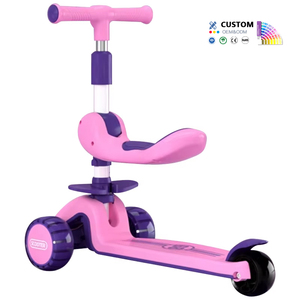
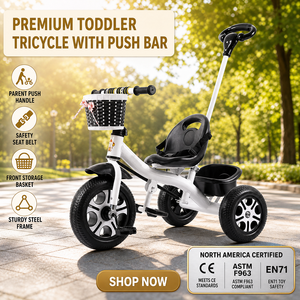
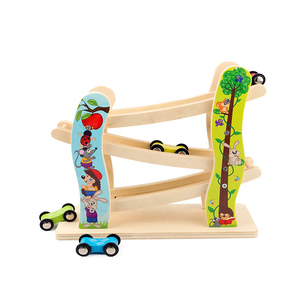
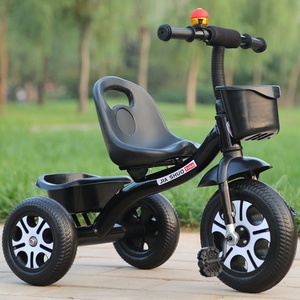
Educational toys are transitioning away from passive screen-based entertainment toward physical, kinesthetic play devices. Modern early childhood educators emphasize active motor-cognition—the pedagogical principle that physical movement directly stimulates neurological synapse development in young children. Products such as sliding ramp cars, pedal tricycles, and multi-wheel push-bikes develop fine and gross motor skills, spatial depth perception, and fundamental physics awareness (velocity, momentum, friction, and balance regulation).
2. Modular Evolutionary Architecture (3-in-1 & 5-in-1 Configurations)
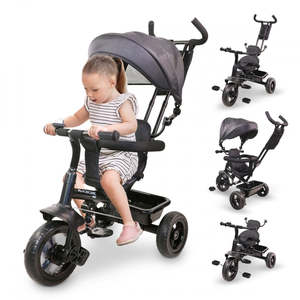
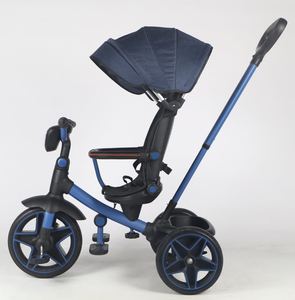
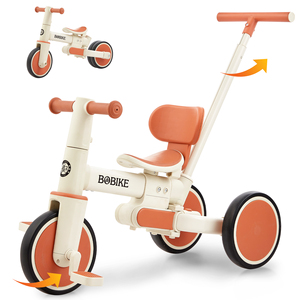
Global consumers demand multi-stage functional longevity from ride-on and learning toys. Modern product design prioritizes modular architecture, allowing a single vehicle chassis to adapt alongside a child’s physiological growth from 18 months to 6 years of age. By incorporating removable parent steering bars, detachable safety enclosures, adjustable seat posts, and convertible rear wheel geometries (converting balance bikes to tricycles), manufacturers optimize value for parents while enabling distributors to market versatile SKUs.
3. Sensory-Enriched Acoustic and Visual Feedback
Cognitive stimulation in early childhood is significantly heightened when tactile physical input is paired with controlled auditory and visual feedback. Integrated LED lighting embedded within translucent EVA/PU wheels generates visual tracking engagement without requiring external battery power. Concurrently, low-decibel acoustic modules encourage rhythm retention, auditory discrimination, and spatial awareness during active riding sessions.
4. Ergonomic Biomechanics & Spinal Health Protection
With increasing awareness surrounding early childhood skeletal development, institutional procurement departments prioritize biomechanically contoured seating, anti-slip footrest positioning, and shock-absorbing wheel formulations. High-grade EVA foam wheels absorb high-frequency floor vibrations, protecting developing toddler spinal structures during indoor and outdoor navigation.
Supply Chain Resiliency & India Sourcing Advantage
Global importers are rapidly diversifying away from single-source manufacturing hubs. India has emerged as a preferred global toy manufacturing center due to competitive raw material ecosystems, skilled toolmaking engineering talent, zero trade tariff penalties, and strict alignment with international quality standards (EN71, ISO 9001, ASTM).
Eco-Conscious Polymer Formulations & Packaging
B2B retail buyers in Western Europe and North America increasingly mandate sustainable toy manufacturing practices. Future procurement specifications prioritize 100% recyclable polyolefin polymers, non-toxic water-based printing inks, and plastic-free unbleached corrugated master packaging designed to lower carbon footprints across maritime transport routes.
Frequently Asked Questions for B2B Importers & Wholesale Buyers
Technical clarity regarding safety compliance, OEM mold development, Minimum Order Quantities (MOQ), testing protocols, and international shipping logistics.
Q1: What safety certifications do Tripple Ess Toys products hold for international export?
All our products are manufactured in compliance with Bureau of Indian Standards (BIS IS 9873 Parts 1-9) and ISO 9001:2015 quality management systems. Furthermore, our raw materials and structural designs are engineered to conform directly to European EN 71 (Parts 1, 2, 3) and American ASTM F963-17 physical, mechanical, and heavy metal chemical safety standards.
Q2: What is the standard Minimum Order Quantity (MOQ) for custom OEM orders?
For standard catalog colors and core SKUs, our baseline production MOQ starts at 300 to 500 units per model. For custom Pantone color matching, private label pad printing, and custom retail box packaging, our typical MOQ ranges from 1,000 to 2,000 units depending on plastic injection mold capacity.
Q3: Can you assist with custom mold development for exclusive proprietary toy designs?
Yes. Our in-house engineering team operates a complete tool room equipped for 3D CAD modeling, rapid stereolithography (SLA) prototyping, and steel injection mold design. We offer low-cost tool development packages and provide partial or full mold cost reimbursement based on scheduled annual order volumes.
Q4: How do modular 3-in-1 and 5-in-1 tricycles optimize ocean freight container logistics?
Our convertible tricycles utilize quick-release knock-down (KD) assembly structures. By shipping products in compact master cartons with nested components, we maximize CBM (Cubic Meter) efficiency per 40ft High Cube (HC) container by up to 35%, significantly reducing per-unit maritime freight costs for international importers.
Q5: What polymers are used in your ride-on vehicles and educational sliding toys?
We strictly utilize virgin high-impact Polypropylene (PP) for load-bearing frames, high-density Polyethylene (HDPE) for smooth hollow bodies, and non-toxic EVA/PU for noise-dampening, puncture-proof wheel assemblies. All materials are certified free from toxic phthalates, BPA, lead, and cadmium.
Q6: What is the typical lead time from contract signing to port delivery?
Standard catalog production orders are completed within 15 to 21 business days. Custom OEM orders requiring specialized color masterbatches or localized retail packaging typically ship within 25 to 35 days post-sample approval. Shipments are dispatched directly via JNPT (Mumbai), Mundra, or ICD Dadri (Noida) ports.
Partner with India's Premier Educational Toy Supplier
Looking for reliable OEM/ODM plastic toy manufacturing, certified child safety compliance, and competitive wholesale factory pricing? Connect with our senior engineering and export management team today.
Get a Quote