Featured OEM Push Tricycles & Ride-On Toys
High-demand export products manufactured to EN71, ASTM F963, and BIS international safety standards.
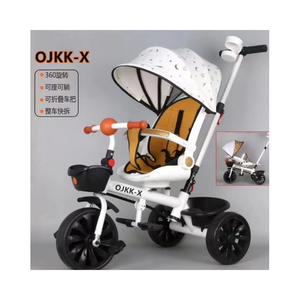
Kids Trike Children Triciclo Baby Walking Tricycle with Light & Music
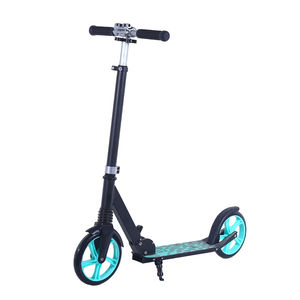
Wholesale Big Wheels Push Trike with Front Suspension Stand-Up Trike
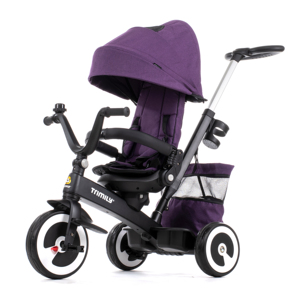
T618A Luxury Kid Magnesium Alloy Ride on Push Trike with Safety Bar
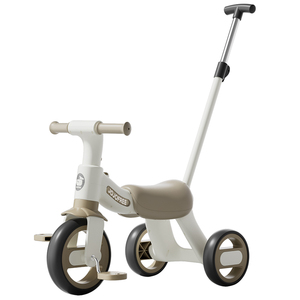
Baby Tricycle with Adjustable Push Handle Toddler Trike (2-3 Years)
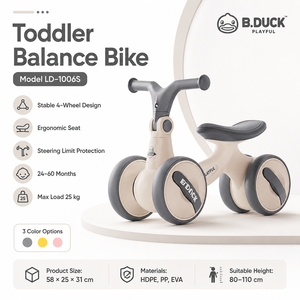
Luddy OEM/ODM B.Duck 3-in-1 Convertible Toddler Push Trike & Balance Bike
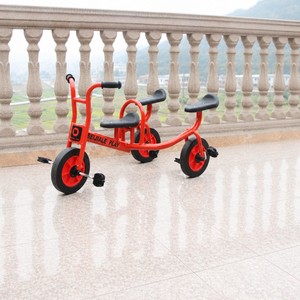
3 in 1 Foldable Toddler Tricycle Push Ride-On Toy with High Back Seat
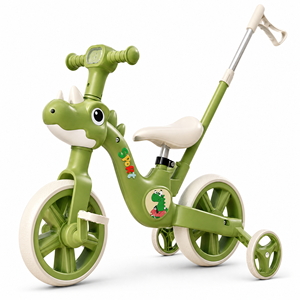
Dino Kids Tricycle with Parent Push Handle, Training Wheels & Padded Seat
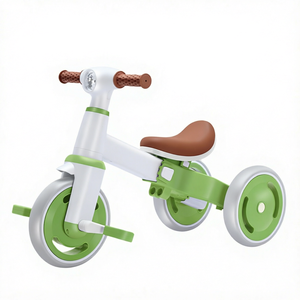
Factory Direct Multifunctional Kids Tricycle with Optional Push Handle
Global Push Tricycle Manufacturing & Sourcing Landscape
The global children’s ride-on vehicle market has undergone a fundamental structural shift over the past decade. Driven by rising safety standards, urban space optimization, and parental demand for multi-functional products, push tricycles (stroller-trikes) have emerged as a dominant category within early childhood mobility hardware. Unlike traditional fixed-pedal tricycles, modern parent-steering push tricycles bridge the developmental gap between infant strollers and independent balance bicycles, serving children from 10 months to 5 years of age.
For international procurement managers, toy brand owners, and global retail buyers, identifying high-caliber manufacturing partners requires evaluating complex technical variables: structural frame integrity, steer-linkage rod tolerances, non-toxic polymer formulations, quick-folding kinematics, and international regulatory compliance (such as EN71, ASTM F963, and BIS IS 9873). This industry report provides a rigorous analysis of the world's leading push tricycle export hubs, key manufacturing technologies, supplier evaluation standards, and future market trajectory through 2030.
Key Procurement Insight for B2B Importers
The international push tricycle market is projected to expand at a CAGR of 6.8% through 2030. Sourcing leaders are increasingly prioritizing factories with in-house precision tooling, robotic welding, and automated injection molding to mitigate supply chain disruptions and ensure zero-defect regulatory compliance.
Top 10 Push Tricycle Factories & Exporters Benchmark Analysis
Global manufacturing of children's push tricycles is concentrated within high-density industrial clusters across East Asia and South Asia. Below is an authoritative technical overview of the top 10 factory typologies and global export leaders currently setting industry standards for OEM/ODM production.
| Factory Cluster / Entity Type | Primary Material Focus | Key OEM Capabilities | Target Export Regions | Compliance Standards |
|---|---|---|---|---|
| 1. Tripple Ess Toys (India Hub) | Virgin PP, Steel & Alloy | In-house Tooling, Injection & Pad Printing | North America, Europe, SE Asia | ISO 9001, BIS IS 9873, EN71 |
| 2. Ningbo OEM Industrial Hub | High-Grade Plastics & Aluminum | Automated Assembly & Canopy Sewing | Europe, Latin America, Middle East | CE, EN71-1/2/3, REACH |
| 3. Pingxiang Heavy-Duty Exporters | High-Tensile Carbon Steel | High-Volume Frame Stamping & Welding | South America, Africa, Central Asia | ASTM F963, ISO 8124 |
| 4. Guangdong Premium Tech Factories | Magnesium Alloy Die-Cast | Precision CNC, 4-in-1 Modular Tooling | North America, Japan, Australia | CPSIA, GCC, EN71, ASTM |
| 5. Zhejiang Ergonomic Mobility Specialists | Polypropylene & EVA Foam | Parent Steer Linkage & Quick-Fold Tech | European Union, UK, North America | EN71, UKCA, REACH |
| 6. Jiangsu Smart-Toy Production Units | ABS & Eco Polymers | Integrated Sound/Light Electronics | SE Asia, South Korea, Middle East | IEC 62115, ROHS, CE |
| 7. Vietnam Emerging Assembly Plants | Steel Tube & Blow Mold PP | CKD/SKD Export Packing Optimization | USA, Canada, EU | ASTM F963, CPSC Compliant |
| 8. Hebei Volume Manufacturing Bases | Standard Steel & Tubular Iron | Cost-Optimized Bulk Mass Production | Eastern Europe, South America | Basic National Quality Standards |
| 9. Taiwan High-Precision Hardware Exporters | Aircraft-Grade Aluminum | Custom Hydroforming & Suspension Systems | Premium Global Retail Chains | TUV Rheinland, GS Mark, EN71 |
| 10. Noida Industrial Zone Direct OEM | Sustainable Polymers & Alloys | End-to-End Product Design to Export Packaging | Global Multi-Channel Importers | ISO 9001:2015, BIS Certified |
Structural Triangle Stability
Top-tier factories utilize low center-of-gravity triangle geometries to eliminate side-rollover hazards during sharp steering maneuvers executed by parents.
Internal Steer-Linkage Rods
Hidden directional linkage rods concealed inside the frame tubing prevent mechanical pinch points for children while providing effortless directional control for parents.
Virgin Non-Toxic Polymers
Leading exporters enforce strict chemical testing to guarantee zero BPA, lead, phthalates, or heavy metal contamination in accordance with REACH and CPSIA regulations.
Technical Evaluation Standards for Push Tricycle Procurement
When conducting supplier audits for push tricycles, procurement officers must look beyond unit FOB prices and inspect factory floor capabilities. A high-quality push tricycle involves multi-disciplinary engineering across metallurgy, polymer chemistry, and ergonomics.
1. Frame Material & Structural Integrity
The structural backbone of a push tricycle dictates its safety margin and service life. Superior factories utilize high-tensile cold-rolled steel tubing or die-cast magnesium alloys. Magnesium alloy frames (as featured in models like the T618A) offer a 30% weight reduction compared to steel while maintaining superior impact absorption and structural rigidity. Welded joints must undergo non-destructive load testing to withstand static weights exceeding 50 kg—far surpassing the standard 25 kg toddler rating.
2. Parental Steering Linkage & Mechanical Tolerances
The defining technical feature of a push tricycle is its parent-steering mechanism. Lower-tier suppliers use exposed wire cables or external pull-rods that suffer from mechanical backlash, stretching, and finger-pinching hazards. Premier exporters engineer internal directional pushrods connected to sealed front-fork bearing assemblies. This configuration guarantees a tight steering response angle (±45°) with zero slop, protecting both parent ergonomics and child safety.
3. Wheel Material Formulation: EVA vs. Rubber vs. Air-Pneumatic
Wheel selection directly influences ride comfort, durability, and export shipping weight:
- High-Density EVA Foam Wheels: Lightweight, puncture-proof, and cost-effective. Ideal for urban pavements and mass-market retail.
- TPR / Rubber Treaded Wheels: Superior traction and shock absorption with quiet operation on tile and asphalt.
- Air-Pneumatic Tires: Premium off-road performance; requires routine pressure maintenance and increases shipping weight.
4. Modular Conversion Kinematics (3-in-1 / 4-in-1 Systems)
Modern consumers demand extended product lifespans. Advanced OEMs design modular frame structures that transform through progressive stages:
- Stage 1 (10–18 Months): Guided push-stroller mode with high backrest, 5-point harness, footrests, and full UV canopy.
- Stage 2 (18–24 Months): Training mode with parent steer handle engaged, but harness and canopy removed.
- Stage 3 (24–36 Months): Tricycle mode with pedals engaged and steering control transferred to the child.
- Stage 4 (36+ Months): Independent balance bike or classic trike with push bar completely detached.
Future Sourcing & Technology Trends (2025–2030)
The global juvenile product sector is evolving rapidly under the influence of environmental regulations, urban living constraints, and digital supply chain integration. Overseas buyers must align their procurement strategies with four key emerging trends:
Trend 1: Eco-Friendly Polymer Engineering & Decarbonization
With global sustainability mandates accelerating, major global importers are requiring factory partners to incorporate recycled Post-Consumer Resin (PCR) Polypropylene and bio-based plastics into non-structural body panels. Leading factories are upgrading their injection molding machinery to run low-energy servo-electric systems, significantly reducing the embodied carbon footprint per unit.
Trend 2: Ultra-Compact Quick-Fold Architecture
Urban households face acute storage constraints. Sourcing interest has shifted heavily toward one-button folding push tricycles that collapse to under 30% of their expanded volume. These compact designs fit effortlessly into automotive trunks and airline overhead compartments while optimizing ocean container loading densities by up to 45%.
Trend 3: Smart Safety Sensors & Interactive Add-Ons
The integration of non-hazardous electronic modules—such as low-voltage LED headlamps, sensory music pods, and parental distance alerts—has transformed standard push trikes into high-value interactive mobility toys. OEM manufacturers offering plug-and-play modular electronic harnesses enable brand owners to release regional variant SKUs without re-tooling structural molds.
Enterprise Advantage: Tripple Ess Toys Direct OEM Infrastructure
With over 35 years of in-house plastic toy manufacturing excellence, Tripple Ess Toys Pvt. Ltd. stands as an industry leader in engineering safe, innovative, and commercially robust push tricycles, scooters, and ride-on toys. Operating out of a state-of-the-art 40,000 sq. ft. manufacturing facility in Noida, India, the company provides end-to-end OEM/ODM solutions tailored to international B2B importers.
In-House Tool Room & Mold Engineering
Equipped with modern CNC machining centers, EDM spark erosion, and 3D CAD modeling facilities capable of developing custom client molds from concept to sample within 30 days.
ISO & BIS Certified Quality Control
Rigorous in-house testing laboratory conducting impact tests, bite tests, drop tests, tensile pull tests, and chemical migration analysis adhering strictly to ISO 9001:2015 and BIS IS 9873 standards.
Global Distribution Scale
Trusted by over 3,000 channel partners across 20+ export destinations. Specialized in SKD/CKD master carton packaging designed to maximize sea container volume and minimize transit damage.
Frequently Asked Questions (FAQ) for Global Sourcing Buyers
Partner With a Certified Push Tricycle OEM Factory
Elevate your product catalog with high-margin, certified push tricycles. Contact our engineering and export team today to receive a customized quotation, catalog, and factory audit report.