
B-55, Sector-5, Noida-201301, Uttar Pradesh, India +91-9999591147    [email protected]

Meet our engineering team at Toy Biz International 2026 — 4 to 7 July 2026, Pragati Maidan, New Delhi, India   •   OEM & ODM tooling slots now open for the 2026 export season

0%

Choosing Early Childhood Educational Toys is more than picking bright colors from a crowded shelf. The right toy can invite a child to touch, compare, build, imagine, and solve small problems independently. A wooden stacking set may strengthen hand control, while a pretend kitchen can encourage language, cooperation, and emotional expression. Yet a higher price does not guarantee better learning. Some attractive toys become quiet clutter after one afternoon.

Kathy Hirsh-Pasek, a developmental psychologist and professor at Temple University, has said, “Play is not the opposite of learning; it is the way children learn.” Her insight gives parents a useful standard: a toy should leave room for active play, not merely produce sounds or display instructions. Children need chances to make choices. They also need safe materials, suitable size, manageable challenge, and space to use the toy creatively.

This guide presents 10 practical tips for buying Early Childhood Educational Toys. It considers age fit, durability, open-ended design, sensory value, and social play. It also asks uncomfortable questions. Is the toy supporting development, or only entertaining adults? Will a child use it repeatedly, or abandon it quickly? No checklist can predict every child’s response. That is the imperfect part. Caregivers still need to observe real play: the puzzled pause, the repeated attempt, and the sudden smile after success. Those details often reveal more than packaging claims.
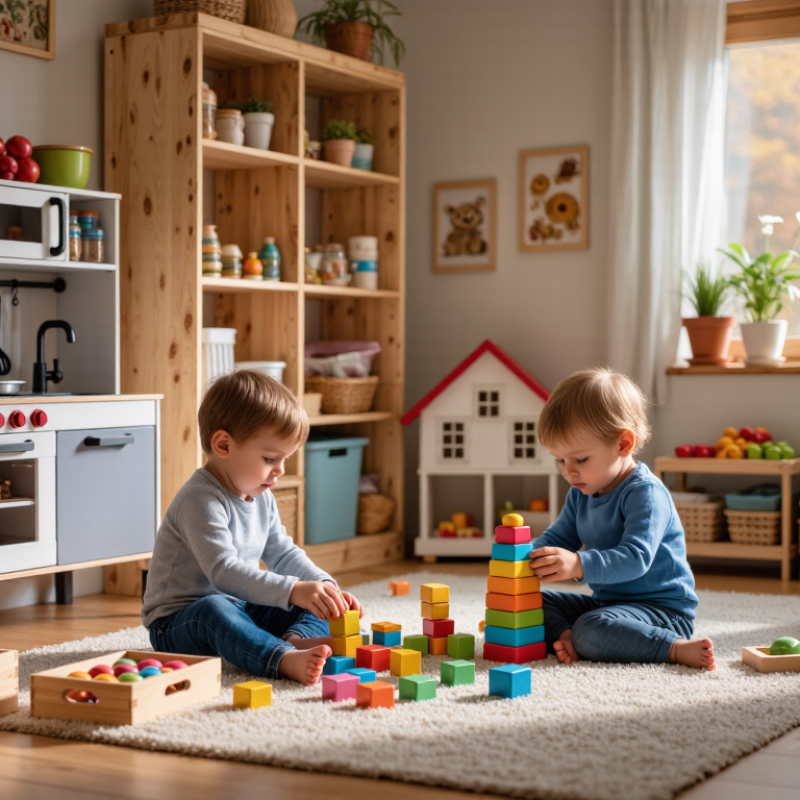
10 Tips for Buying Early Childhood Educational Toys

Understanding Early Childhood Educational Toy Needs

Understanding Early Childhood Educational Toy Needs

Choosing educational toys starts with observing the child, not the packaging. Start with the child. Watch how they grasp, stack, imitate, ask questions, and recover from small failures. The American Academy of Pediatrics’ 2019 clinical report recommends toys that encourage caregiver interaction, pretend play, language, and problem-solving. A toy should invite conversation across a kitchen table, not simply flash lights beside a child.

Age labels matter, but development varies. Choose pieces that are challenging without causing repeated frustration. Open-ended blocks, nesting cups, puzzles, puppets, and washable art materials can support several skills at once. Check size, edges, materials, cleaning instructions, and durability. Avoid toys with loose parts for children who still mouth objects. The World Health Organization, UNICEF, and World Bank’s Nurturing Care Framework stresses responsive care, early learning, safety, and health as connected needs.

Research also shows why careful selection matters. A 2016 Lancet analysis estimated that more than 250 million children under five in low- and middle-income countries risked missing their developmental potential because of poverty and stunting. Toys cannot repair those conditions. They can, however, create small moments for language, movement, and shared attention. I once valued complexity too highly; a simple cardboard box often produced richer pretend play. Less can be more. Reconsider any toy that requires batteries, adult instructions, or constant praise to remain interesting.

Assessing Safety, Age Suitability, and Developmental Value

When assessing an early childhood toy, safety should outweigh bright colors and clever packaging. Check for loose parts, sharp edges, exposed wires, and strong chemical smells. Small pieces can create serious choking risks for young children. Follow the age label, but read the care instructions carefully. A washable surface matters after spilled juice, muddy hands, or a minor illness. Look for recognized safety certification in your region, and inspect the toy regularly for cracks or detached pieces.

Age suitability is more than a printed number. Consider the child’s motor skills, language level, attention span, and frustration tolerance. A puzzle designed for older children may discourage a three-year-old, even when the picture looks attractive. The best choice often offers a small challenge without requiring constant adult rescue. Watch how the child handles it. That observation can be more useful than the box description.

Developmental value comes from meaningful play, not from complicated features. Blocks can support planning, balance, vocabulary, and social cooperation. Simple pretend-play materials may encourage storytelling and emotional understanding. Avoid toys that perform everything with one button. Children need room to make choices, repeat actions, and invent mistakes. No checklist is perfect. I have sometimes mistaken noise for learning, then noticed the child abandoned the toy within minutes. Choose items that invite conversation, movement, and flexible use, while accepting that one toy cannot support every area of development.

10 Tips for Buying Early Childhood Educational Toys

Assessing safety, age suitability, and developmental value

This evidence-informed priority model gives the greatest weight to safety and age suitability. For children under three, small parts can present a choking risk, while age labels help match toys with a child’s abilities. Toys with open-ended features can encourage language, problem-solving, motor skills, creativity, and social development. Always check for loose magnets, accessible button batteries, sharp edges, excessive noise, and damaged components.

Evaluating Learning Goals, Design Features, and Play Benefits

10 Tips for Buying Early Childhood Educational Toys

Tip 1 Define the learning goal before choosing a toy. A shape sorter may support spatial reasoning, while counting pieces can introduce number sense. Watch how children actually play, not only what the packaging promises. During classroom observations, I have seen children use puzzles as storytelling props. That unexpected use can be valuable.

Tip 2 Examine the design closely. Choose sturdy materials, smooth edges, clear colors, and pieces that small hands can grip. Check age guidance, washable surfaces, and secure parts.

Tip 3 Look for flexible challenges. A good toy should offer an easy starting point and room for new skills. However, “educational” does not always mean effective. Some toys include too many sounds or lights, which may distract from the intended goal. I have sometimes overvalued attractive features.

Tip 4 Consider open-ended play. Blocks, pretend food, and loose art materials can support language, planning, cooperation, and fine-motor control.

Tip 5 Test whether the toy encourages interaction. An adult might ask, “What could we build next?” rather than provide every answer.

Tip 6 Notice the child’s emotional response. Frustration can support persistence, but repeated failure signals poor fit. Observe for several minutes.

Tip 7 Choose toys that suit the child’s current abilities and interests.

Tip 8 Avoid buying duplicates without a clear purpose.

Tip 9 Read care instructions and inspect the toy regularly.

Tip 10 Reassess its value after real play, because intended benefits and actual benefits may differ.

Comparing Materials, Durability, Inclusivity, and Usability

10 Tips for Buying Early Childhood Educational Toys

Comparing Materials, Durability, Inclusivity, and Usability

Tip: Check materials before judging appearance. Choose sturdy wood, food-grade silicone, or durable recycled plastic with clear safety information. Avoid sharp seams, loose magnets, and strong chemical smells. The U.S. Consumer Product Safety Commission reported about 231,700 toy-related emergency-room injuries among children in 2023. Small construction details matter. I once valued attractive colors too highly and missed a weak hinge.

Tip: Test durability through daily routines. Can a child drop, wash, and rebuild the toy without damage? Look for reinforced joints, washable surfaces, and replaceable parts. ASTM F963 testing covers many physical, mechanical, and chemical toy hazards. Still, compliance does not guarantee long-term usefulness. A toy may pass testing yet frustrate children after one broken piece. Buy fewer items, then observe how they survive real play.

Tip: Usability should include every child. UNICEF estimates that nearly 240 million children worldwide live with disabilities. Select toys with large grips, strong color contrast, tactile features, and adjustable difficulty. Inclusive images should show different bodies, families, and cultures naturally. Avoid toys that offer only one correct method. Open-ended play supports creativity, but too many options can overwhelm young users. Ask a teacher, caregiver, or child to test the toy. Their feedback may expose assumptions that a product description hides.

10 Tips for Buying Early Childhood Educational Toys - Comparing Materials, Durability, Inclusivity, and Usability

No. Buying Dimension What to Look For Material Guidance Durability Check Inclusivity and Usability Practical Benchmark
1 Age and developmental fit Choose toys that match the child’s current abilities while offering a small, manageable challenge. Use smooth, non-toxic materials with no easily detachable parts for younger children. Inspect seams, joints, coatings, and moving parts before purchase. Look for simple controls, clear feedback, and multiple ways to play. High priority
2 Material safety Prefer toys with clearly identified materials, safety information, and care instructions. Solid wood, food-grade silicone, durable polypropylene, and washable textiles are commonly practical choices when properly manufactured. Check for splinters, sharp edges, peeling paint, strong chemical odors, and brittle plastic. Materials should be comfortable for children who are sensitive to textures, smells, or temperature. Smooth and odor-free
3 Choking and small-part risk Avoid loose magnets, button batteries, long cords, and small detachable components for children under three. Favor one-piece or securely attached components for toddlers. Pull, twist, and flex accessible parts gently to identify weak attachments. Use large, high-contrast pieces that are easy to see, grasp, and retrieve. No small parts for under-3s
4 Structural durability Select toys designed to withstand repeated handling, dropping, stacking, and cleaning. Thick-walled plastic, sealed hardwood, reinforced fabric, and sturdy cardboard are generally more durable than thin sheets or untreated surfaces. Look for secure fasteners, stable bases, reinforced corners, and replaceable pieces where available. A durable toy supports independent use without requiring delicate handling. Stable under ordinary play
5 Washability and hygiene Choose toys that can be cleaned according to the manufacturer’s instructions. Non-porous plastic and silicone are easier to wipe and sanitize than untreated wood or absorbent foam. Avoid deep cracks, fabric-only surfaces, and inaccessible cavities that trap moisture or dirt. Simple cleaning routines help caregivers maintain safe shared-play environments. Wipe-clean surfaces
6 Inclusive representation Look for dolls, figures, books, and role-play materials showing varied abilities, cultures, family structures, skin tones, and occupations. Printed images and figures should use durable, fade-resistant finishes. Check that facial features, wheels, hearing aids, mobility devices, and other details are securely constructed. Representation should be respectful, varied, and integrated into ordinary play rather than treated as a novelty. Review the whole set
7 Physical accessibility Choose toys that can be operated with different levels of strength, reach, vision, and motor coordination. Use lightweight materials, large handles, textured grips, and high-contrast markings where helpful. Controls should withstand repeated pressing, turning, or pulling without excessive force. Prefer adjustable, switch-adaptable, or open-ended designs that allow more than one method of participation. Low-force operation
8 Learning value Prioritize toys that encourage problem-solving, language, fine-motor skills, early math, creativity, or social play. Open-ended materials such as blocks, puzzles, art supplies, and pretend-play props can support repeated learning. Choose toys with enough variety to remain useful as skills develop. Activities should permit different answers, abilities, communication styles, and levels of challenge. Multiple learning pathways
9 Usability and independence Check whether a child can understand the basic action without constant adult instruction. Use clear labels, tactile distinctions, and durable visual or audio cues. Parts should be easy to assemble, store, and replace without frequent breakage. Large openings, intuitive controls, readable instructions, and organized storage improve independent use. Test before buying
10 Safety information and long-term value Read the age label, warnings, cleaning guidance, and applicable safety-standard information. Favor materials with transparent care and composition information; avoid damaged or unmarked products. Consider repairability, replaceable batteries, refillable components, and resistance to everyday wear. A toy with lasting educational value is more inclusive when it can be shared across ages and ability levels. Clear instructions and care data

Safety requirements vary by country. Always follow the product’s age guidance, warnings, recall notices, and care instructions, and supervise children when appropriate.

Making a Practical Purchase Decision for Home or Classroom Use

10 Tips for Buying Early Childhood Educational Toys

Making a Practical Purchase Decision for Home or Classroom Use

Choosing educational toys requires more than bright colors and cheerful packaging. In classroom observations, children often return to simple materials that allow flexible play. Check the recommended age, then match the toy with a clear learning goal. Consider language, counting, movement, problem-solving, or social cooperation. Safety comes before novelty. Inspect small parts, sharp edges, loose seams, and washable surfaces. Read safety guidance carefully, especially for younger children.

A practical purchase also depends on daily use. Choose durable materials that can survive drops and repeated cleaning. Select open-ended toys with several possible activities. Include sensory variety, such as smooth blocks, textured cards, or nesting containers. Check the size before buying. A toy should fit small hands but not become a choking risk. Storage matters too. If pieces scatter easily, use a labeled box or rethink the purchase. For classrooms, calculate how many children can play together. For home use, consider noise, available floor space, and cleanup time.

Good choices should welcome different abilities and family experiences. Look for toys showing varied people, homes, and ways of communicating. Compare the total cost, including replacement pieces and batteries. When possible, borrow or test a similar item before purchasing. A bright, expensive toy may remain untouched. That happened in one activity area. The quieter sorting set received more daily use. Some choices will still miss the mark, so observe children and adjust future purchases.

FAQS

How should adults choose an educational toy?

Observe the child before reading the packaging. Notice how they grasp, stack, imitate, question, and handle small failures. Choose toys that invite conversation and shared play. Observe again after purchase.

Should age labels determine the final choice?

Age labels provide useful guidance, but children develop at different speeds. Choose a challenge without causing repeated frustration. A puzzle may suit one child and overwhelm another. Adjust when needed.

Which toys support several developmental skills?

Open-ended blocks, nesting cups, puppets, puzzles, and washable art materials work well. They can support language, movement, imagination, and problem-solving. A cardboard box may become a shop, train, or hiding place. Simple can be powerful.

What safety details should adults inspect?

Check for sharp edges, loose seams, weak hinges, and small detachable parts. Avoid loose magnets and strong chemical smells. Confirm the toy fits the child’s hands without becoming a choking risk. Inspect it often.

How can adults judge durability?

Ask whether the toy can survive drops, washing, rebuilding, and repeated handling. Look for reinforced joints, washable surfaces, and replaceable pieces. Testing standards help, but they cannot predict every daily problem. One broken part may end the play.

How can a toy include children with different abilities?

Look for large grips, strong color contrast, tactile surfaces, and adjustable difficulty. Choose pictures showing varied bodies, families, homes, and communication styles. Invite a child or teacher to test the toy. Their feedback may reveal hidden assumptions.

What should families consider before buying toys for home?

Consider floor space, noise, storage, cleaning time, and replacement costs. Use a labeled box when pieces scatter easily. Include sensory variety, such as smooth blocks and textured cards. A bright toy may still remain untouched.

How should teachers select toys for classroom use?

Match each toy with a clear goal, such as counting, language, movement, or cooperation. Check how many children can play together. Choose materials that tolerate frequent cleaning and shared handling. I once valued complexity too highly; quieter materials received more daily use.

Conclusion

Choosing the right Early Childhood Educational Toys begins with understanding a child’s age, interests, abilities, and learning needs. This guide explains how to assess safety, age suitability, and developmental value before making a purchase. It also highlights the importance of selecting toys that support clear learning goals, such as language development, problem-solving, creativity, motor skills, social interaction, and emotional growth. Thoughtful design features, including simple instructions, engaging textures, appropriate challenges, and opportunities for open-ended play, can make learning more meaningful and enjoyable.

The guide also encourages buyers to compare materials, durability, inclusivity, and ease of use. Safe, sturdy, non-toxic materials and accessible designs are important for both children and caregivers. Whether purchasing for a home or classroom, consider storage, cleaning, group use, budget, and long-term value. By balancing educational benefits with practicality, adults can choose toys that encourage independent exploration, meaningful play, and steady development.

Oliver

Oliver

Oliver is a dedicated marketing professional with a strong understanding of product strategy, customer needs, and industry trends. Through years of experience working closely with product development, sales, and customer service teams, he has developed a highly professional knowledge of the......