
Meet our engineering team at Toy Biz International 2026 — 4 to 7 July 2026, Pragati Maidan, New Delhi, India • OEM & ODM tooling slots now open for the 2026 export season
Plastic Piggy Bank Toys remain popular with gift shops, party suppliers, schools, and promotional buyers. Their appeal is easy to understand: bright colors, familiar shapes, and a simple way to encourage saving. But wholesale decisions involve more than appearance. Buyers also need to consider durability, usable capacity, finish quality, and how products arrive in bulk.
This guide compares ten options through practical purchasing criteria. Look for smooth edges, secure closures, consistent coloring, and packaging that protects each piece during shipping. A pre-production sample can reveal details that product photos miss, such as a stiff stopper or a lid that feels loose. Small details matter. Confirm available sizes, carton quantities, customization choices, and minimum order requirements before requesting a quote. Specifications can vary between suppliers, so check them directly rather than relying on a listing alone.
The best choice depends on your customers and sales channel. A compact animal-shaped bank may suit party favors, while a larger, sturdier design may work better for retail shelves. Ask about material information and age guidance, and review any relevant product documentation provided by the supplier. That trade-off matters: decorative features can attract attention, but they should not make everyday handling awkward. No single design fits every order, and even a promising sample may not represent every production batch. Use the following selection as a starting point, then compare samples, pricing, and supply consistency before placing a wholesale order.
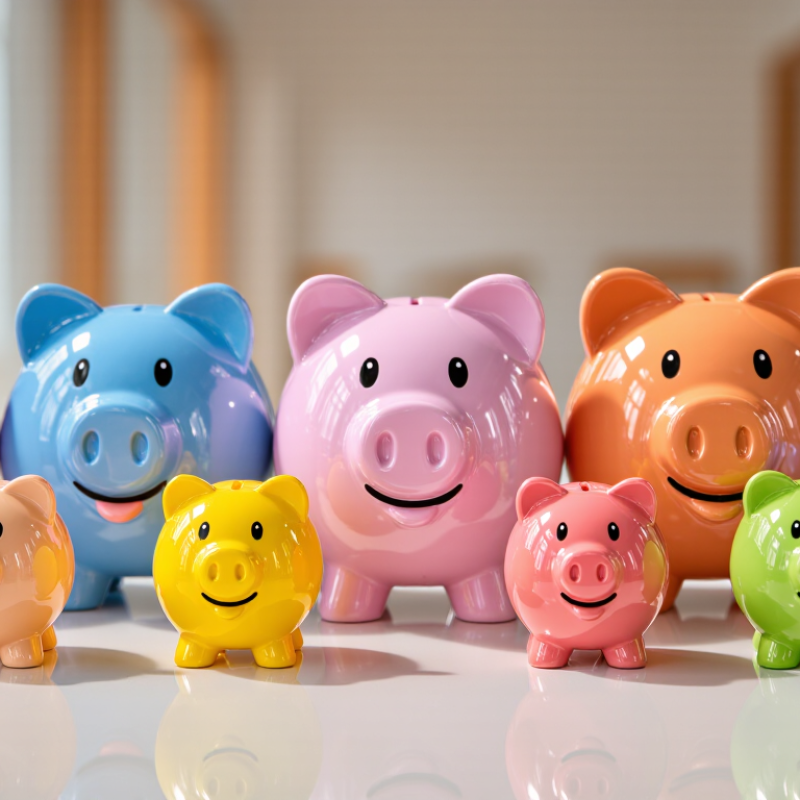
Plastic piggy bank toys are small savings containers shaped like pigs, often made from molded plastic. A narrow slot on the back or top lets users insert coins, while a plug or removable panel provides access later. Some designs have a fixed body and require coins to be retrieved by opening or breaking the bank, so buyers should check the construction before ordering.
The basic use is simple. Drop a coin through the slot, and it rests inside the hollow body. Easy to understand. For children, the action can make saving feel tangible: a coin disappears with a soft clink, and the bank gradually feels heavier. Certain models include a counter or sound feature, but these add parts that may need closer inspection. A slot that is too narrow can reject larger coins, and a loose stopper may fall out during handling. Small flaws matter.
For wholesale evaluation, inspect the plastic finish, seam quality, slot dimensions, and access opening on a sample. Check whether the bank stands steadily on a flat surface and whether its edges feel smooth. Ask suppliers for material details and product specifications rather than relying only on product photos. Plastic banks are not all equally durable; some are better suited to light play than frequent use. That distinction is easy to overlook.
| No. | Product Style | Typical Construction | How It Works | Useful Features | Wholesale Buying Checks |
|---|---|---|---|---|---|
| 1 | Classic pig-shaped bank | Molded plastic shell, commonly made from polypropylene (PP) or ABS; exact material varies by product. | Coins are inserted through a slot. A removable stopper or opening panel is used to retrieve savings. | Familiar shape, simple operation, and broad appeal as a basic savings toy. | Check the slot size, closure fit, edge finish, and whether the opening can be operated by the intended user. |
| 2 | Transparent coin bank | Clear or translucent plastic body, often paired with a molded plastic base or lid. | Coins enter through a slot and remain visible inside the container. | Shows saving progress without opening the bank. | Confirm that the body is described accurately as clear or translucent and inspect it for scratches, cracks, and sharp edges. |
| 3 | Animal-shaped bank | Plastic body molded into an animal form, such as a cat, bear, or elephant; designs vary. | A coin slot directs coins into the hollow body; coins are removed through a plug or opening, if included. | Offers alternatives to the traditional pig design and can suit themed assortments. | Review the shape, painted details, small attached parts, and the stated age grading for each design. |
| 4 | Vehicle-shaped bank | Molded plastic vehicle body; wheels may be fixed or movable, depending on the model. | Coins are placed into a slot in the body. The bank may also be pushed or rolled if its wheels move. | Combines a coin container with a vehicle-style play feature. | Check wheel attachment and movement, slot placement, and whether detachable parts are present. |
| 5 | Mini or pocket-size bank | Compact molded plastic container with a coin slot and, on some models, a removable stopper. | Coins are collected inside the small body and removed through its access opening. | Uses less shelf and shipping space than larger formats. | Verify finished dimensions, usable opening size, packaging protection, and age suitability; small items may present a choking risk. |
| 6 | Large-capacity bank | Larger hollow plastic body with a slot; capacity depends on the product's internal dimensions. | Coins accumulate inside until the stopper or access panel is opened. | Provides more storage space than a compact bank of the same design. | Request actual dimensions and product capacity information rather than relying on the style name alone. |
| 7 | Lockable bank | Plastic body with a keyed or combination-style locking feature on models that include one. | Coins enter through a slot; access to the opening panel or door is controlled by the lock mechanism. | Adds a simple privacy or role-play feature; it is not a substitute for a security safe. | Check whether keys or instructions are included, how the lock operates, and whether the product is presented as a toy rather than secure storage. |
| 8 | Sound-or-light bank | Plastic bank with an electronic module in some versions; battery type and layout vary. | A coin may trigger a sound or light through a switch or sensor, depending on the design. Coins are collected inside the body. | Adds an interactive response to depositing coins. | Confirm battery requirements, battery-compartment security, included components, and applicable testing and labeling for the sales market. |
| 9 | Coin-counting bank | Plastic container with a counting display or counter mechanism on models that provide this feature. | The counter registers deposits through a sensor or mechanical input; counting accuracy depends on the design and coin type. | Can make saving progress easier to track than a standard non-counting bank. | Test the counter with the intended coin sizes and confirm whether it counts individual coins or estimates value. |
| 10 | Decorative character or themed bank | Plastic body shaped or decorated around a general theme; surface finishes and parts vary. | Coins are inserted through a slot and retrieved through a stopper or opening when provided. | Supports seasonal, gift, or coordinated toy assortments. | Check decoration durability, attached components, assortment consistency, and any restrictions on licensed artwork or designs. |
Buying note: Plastic piggy bank toys are hollow coin-storage products with a slot and an access method that varies by design. Materials, dimensions, closures, electronic features, and age recommendations differ by item. Request product specifications and market-specific safety documentation before ordering.
Check wall thickness, color, finish, mold seams, and the base plug. Look closely.
Try coins of different sizes. They should pass without catching on sharp edges or bending the bank.
No. It may reveal weak seams or a loose plug, but it does not replace appropriate safety testing. One sample can miss flaws.
Compare dimensions, capacity, packed weight, carton measurements, and lead time. Keep specifications in writing.
Request quotes for several quantities, such as 500, 1,000, and 3,000 pieces. Check whether lids, printed details, bags, and cartons are included.
Ask for carton size, gross weight, and pieces per carton. Check how cartons stack on a pallet. Freight adds up.
No. It helps confirm color, finish, and slot size, but production may vary. I would still inspect a production sample.
Consider one for a first order, especially if defects would cause problems. Extra packaging may help replace damaged cartons, but it adds cost.
Plastic Piggy Bank Toys are simple, reusable savings containers designed to help children build money-saving habits through playful shapes, colors, and features. They are commonly made from lightweight plastic and may include coin slots, removable stoppers, clear panels, or themed designs. For wholesale buyers, choosing suitable products means looking beyond appearance: consider material quality, sturdiness, finish, ease of use, age suitability, and whether the design is practical for storage and display.
This guide introduces ten useful types of Plastic Piggy Bank Toys for wholesale purchasing, from classic animal shapes to compact, transparent, and interactive styles. It also explains how to compare product options and assess pricing, packaging, order quantities, and supplier communication. By balancing design appeal with durability, consistent quality, and shipping needs, buyers can select products that fit their customers and business goals.