
B-55, Sector-5, Noida-201301, Uttar Pradesh, India +91-9999591147    [email protected]

Meet our engineering team at Toy Biz International 2026 — 4 to 7 July 2026, Pragati Maidan, New Delhi, India   •   OEM & ODM tooling slots now open for the 2026 export season

0%

Choosing a pedal tricycle for a child involves more than color or price. A sturdy frame, stable wheelbase, comfortable seat, and reachable pedals can make everyday rides easier. Fit matters. A child should sit upright and reach the pedals without stretching or sliding forward. The right details vary with age, height, riding surface, and experience.

This guide compares 10 best pedal tricycles for children for global buyers, from practical first rides to models with useful storage. We consider frame construction, tire type, steering control, adjustability, assembly, and the clarity of product instructions. Small details count: a loose handlebar, a seat that will not stay in place, or hard-to-find replacement parts can turn a promising purchase into a frustrating one. Not every feature suits every family.

For international sourcing, buyers should also confirm age and weight guidance, packaging dimensions, spare-part availability, and relevant safety documentation for their destination market. Requirements differ by region, so product claims should be checked rather than assumed. Photos can help, but they do not replace testing a sample or reviewing clear specifications. We cannot judge long-term durability from a listing alone. That limitation matters. The recommendations that follow offer a practical starting point for comparing a Children Pedaled Tricycle, while leaving room for the child’s fit, the seller’s support, and real-world use to guide the final choice.
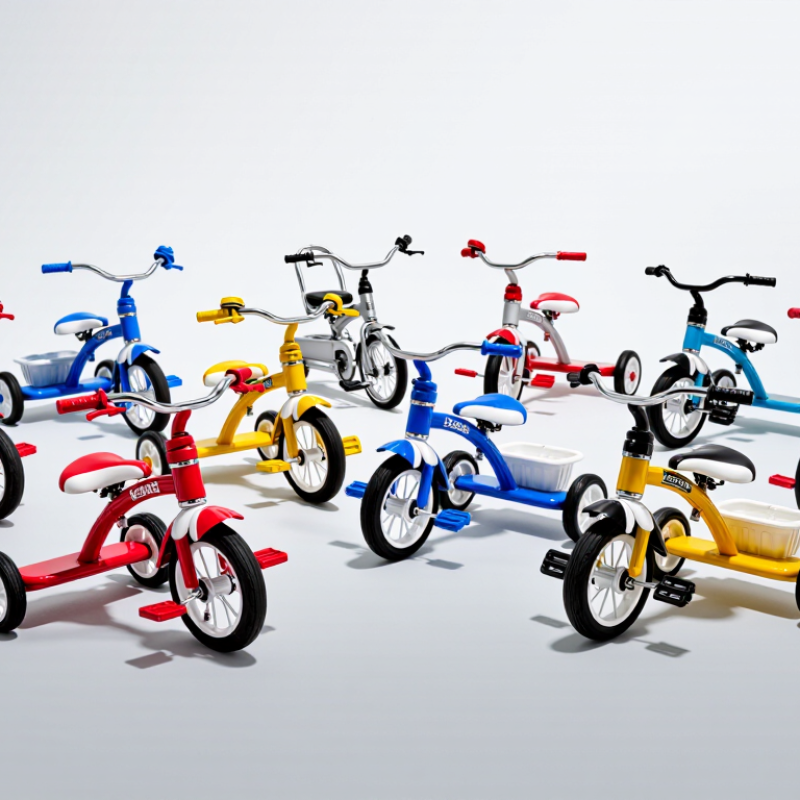
10 Best Pedal Tricycles for Children for Global Buyers

Define Global Buying Criteria: Age Range, Load Capacity, and Stability

For global buyers, age range is a starting point, not a fit guarantee. Compare the stated age guidance with the child’s inseam, reach, and coordination. A rider should sit upright, pedal without stretching, and grip the handlebars comfortably. If the child cannot reach the pedals well, steering may feel awkward. Fit matters. Check the minimum age and maximum rider weight on the product label or manual. Compare units carefully; regional listings may show kilograms or pounds, and conversions can be inconsistent. Age labels are useful, but they are not exact.

Load capacity should be clear. Confirm whether the stated limit covers the rider alone or also includes a basket and its contents. Stay below the maximum, and check the frame, fasteners, wheels, and seat for looseness before use. Stability matters on everyday surfaces. A wider wheelbase, low seat, and broad rear wheels can help resist tipping during slow turns, though no tricycle is tip-proof. Try it on level, open ground with an adult nearby, and observe how it turns and stops. Uneven paving can change the feel. A hands-on check often reveals details that product photos cannot; fit may still be imperfect as a child grows.

Verify Toy Safety Benchmarks: ASTM F963-23, EN 71, and ISO 8124

For global buyers comparing pedal tricycles, safety paperwork deserves as much attention as frame strength. ASTM F963-23 is a United States toy-safety standard; EN 71 is a European series, while ISO 8124 provides international toy-safety standards. Their scopes and applicable editions can differ. Check which requirements apply to the intended market, age group, and product design rather than assuming one report covers every destination.

Ask for test reports that identify the exact model, materials, and configuration being purchased. Review relevant checks for stability, pinch or sharp edges, small parts, and chemical properties. Confirm that age labels and assembly instructions match the tested product. Small details matter. A certificate alone cannot show whether later production units remain consistent, and it is easy to overtrust paperwork without checking the actual tricycle.

Tips: Request reports from a competent testing laboratory, then compare model numbers and dates against the order. Inspect a sample for loose pedals, exposed fasteners, and a seat that shifts under pressure. If a document is unclear, ask the supplier to explain its scope in writing. Safety review is not a one-time checkbox.

10 Best Pedal Tricycles for Children for Global Buyers — Verify Toy Safety Benchmarks: ASTM F963-23, EN 71, and ISO 8124

This is a brand-free shortlist of ten tricycle types for different use cases, not a ranking of tested products. Age bands and wheel sizes are typical selection ranges, not universal specifications; always check the maker’s stated age, weight limit, dimensions, and assembly instructions. A standards reference below is a verification checklist, not a claim that any particular tricycle has been tested or certified.

No. Tricycle type Typical age guidance Typical wheel setup Best suited for Practical buying checks Safety documentation to verify
1 Low-seat first pedal tricycle About 2–4 years; only when the child can reach the pedals and sit securely Three wheels; commonly about 8–10 in (20–25 cm) Early pedalling practice on flat, supervised surfaces Check seat height and reach, stable wheelbase, rounded edges, and a clearly stated maximum load. Request applicable test reports for ASTM F963-23, relevant EN 71 parts, or relevant ISO 8124 parts for the destination market.
2 Adjustable-seat growth tricycle About 2–5 years, subject to the product’s stated fit range Three wheels; commonly about 8–12 in (20–30 cm) Families wanting more than one seat position as a child grows Confirm adjustment locks cannot slip, pinch points are guarded, and the seat remains secure at every setting. Check that the exact model and configuration are covered by the test documentation; verify applicable ASTM F963-23, EN 71, or ISO 8124 reports.
3 Push-handle tricycle with freewheel option Often marketed for roughly 1.5–4 years; verify the maker’s minimum age and child-control mode Three wheels; commonly about 8–10 in (20–25 cm) Caregiver-assisted outings that can transition toward independent pedalling Inspect handle attachment and locking, footrest security, steering limits, and how the freewheel mode disengages the pedals. Ask for age-specific test coverage and applicable mechanical/physical safety reports under the destination-market standards.
4 Compact indoor tricycle About 2–4 years, depending on fit Three wheels; commonly about 6–8 in (15–20 cm) Small play areas and smooth indoor flooring Check overall width and turning space; choose wheels that suit the floor and avoid use near stairs or hard edges. Verify toy-safety documentation and any relevant material or coating test results; standards alone do not establish suitability for every floor or setting.
5 Outdoor tricycle with wider rear stance About 2–5 years, depending on seat and pedal reach Three wheels; commonly about 10–12 in (25–30 cm) Paths, patios, and other firm, even outdoor surfaces Look for a stable stance, durable wheel and axle construction, secure fasteners, and instructions limiting use on slopes and roads. Request applicable ASTM F963-23, EN 71, or ISO 8124 reports for the product as sold, plus clear warnings and instructions for the target market.
6 Lightweight, easy-carry tricycle About 2–4 years, subject to the maker’s fit guidance Three wheels; commonly about 7–10 in (18–25 cm) Caregivers who need to lift or store the tricycle frequently Compare the stated product weight with frame rigidity; check that lightweight construction does not compromise secure joints or stability. Confirm the tested sample matches the final materials and construction; obtain relevant standard reports rather than relying on a general compliance statement.
7 Folding or compact-storage tricycle Age varies widely; follow the exact model’s minimum age and use instructions Three wheels; commonly about 7–10 in (18–25 cm) Homes with limited storage or travel by car Check the folding lock, secondary retention, pinch-point protection, and whether folding is intended to be done by an adult. Ask whether folding mechanisms and all supplied accessories were included in applicable ASTM F963-23, EN 71, or ISO 8124 assessments.
8 Tricycle with enclosed chain drive About 3–6 years, depending on fit and the manufacturer’s stated age range Three wheels; commonly about 10–12 in (25–30 cm) Older preschoolers learning steady pedalling Check that the chain and sprocket are guarded, the crank turns smoothly, and pedals and fasteners resist loosening. Verify mechanical/physical safety test coverage and instructions under the applicable parts of ASTM F963-23, EN 71, or ISO 8124.
9 Wide-wheelbase tricycle for added steadiness About 2–5 years, subject to the child’s size and product limits Three wheels; commonly about 8–12 in (20–30 cm) Children who benefit from a broad stance during early riding practice A wider stance does not remove tip-over risk; check steering range, seat fit, load limit, and use only on suitable level surfaces. Review age grading, warnings, and relevant test reports for the exact model; do not treat a wide wheelbase as proof of compliance.
10 Adjustable-handle tricycle for shared caregiver use Often about 1.5–4 years; confirm the product’s child age range and operating modes Three wheels; commonly about 8–10 in (20–25 cm) Caregivers seeking a steering or pushing handle that can be adjusted or removed Inspect handle locks and steering linkage, confirm the child cannot access detachable small parts, and follow the specified riding mode. Request documentation covering the complete configuration, including removable parts and accessories, against applicable destination-market requirements.

Benchmark guide: ASTM F963-23 is a U.S. toy-safety specification; EN 71 is a European toy-safety standards series, with parts covering topics such as mechanical and physical properties, flammability, and migration of certain elements; ISO 8124 is an international toy-safety standards series with multiple parts. The applicable requirements depend on the product, age grading, and destination market. Buyers should verify current regulations, the relevant standard parts, test-report scope, warnings, and traceability with the supplier or an accredited testing laboratory.

Compare 10 Top Tricycles by Frame, Wheel Size, and Brake Design

A useful comparison of ten children’s pedal tricycles starts with frame geometry, not color or accessories. Compact steel frames with 8-inch wheels suit tight indoor turns, but can feel cramped outdoors. Steel models with 10- or 12-inch wheels offer more room as children grow. Aluminum frames are lighter to lift, though tube joints still deserve close inspection. Check for sharp edges and a seat that stays firmly fixed. Small details matter.

Wheel size changes comfort and control. Two 10-inch designs with solid tires need little maintenance, but may feel firm on uneven pavement. A 12-inch model with pneumatic tires cushions bumps better; its tires need regular pressure checks. Wider rear wheels can steady a beginner, while a long frame may be harder to store. Low-step frames help children climb aboard without twisting awkwardly. Fit varies, so compare seat adjustment with the child’s leg reach.

Brake design deserves a careful look across the remaining choices. Some tricycles use pedal-driven rear braking; others add a hand lever or parking brake. A hand lever is useful only if small fingers can reach and squeeze it. Test the brake at walking speed on a clear, flat surface. That is not a substitute for supervision. One limitation in any chart: listed wheel sizes cannot show how a tricycle feels on your own driveway.

Assess Fit and Durability: Seat Adjustment, Materials, and Terrain

A suitable pedal tricycle should fit the child now, with room for modest growth. Look for a seat that adjusts securely and lets the child reach the pedals without stretching. Knees should bend slightly at the far point of each stroke. The handlebars should feel easy to hold, not require a forward lunge. Check the stated age and weight limits; seat adjustment does not make every frame suitable for every child. A quick test ride on level ground can reveal awkward reach or wobbling.

Tips: Tighten the seat after adjustment. Recheck it regularly. Small details matter.

For durability, compare frame materials, wheel construction, and exposed fasteners. A steel frame can feel sturdy but may need careful storage to limit rust. Lightweight materials are easier to carry, though their build quality varies. Solid wheels can resist punctures, while air-filled tires may roll more comfortably over uneven paths. Consider where the tricycle will actually be used: smooth pavement, packed dirt, or rough gravel. Not every model handles all three well. Inspect joints and pedal movement after assembly, and revisit those checks as the tricycle sees regular use. A little maintenance is easy to forget.

Check Market Readiness: Regional Labels, Assembly, Warranty, and Parts

Market readiness starts with the carton and the first assembly step. A pedal tricycle may fall under different product categories across markets, so confirm local classification before preparing labels. Check age grading, warning language, importer details, and traceability codes. The European Commission’s Safety Gate 2023 report recorded 3,412 safety alerts; toys represented 23%. That figure is not a tricycle failure rate, but it shows why clear warnings and documented checks matter. Keep the label readable after the box is opened. Tiny print gets overlooked.

Assembly quality also depends on practical instructions. Show the correct order for fitting the handlebar, pedals, and seat, with clear diagrams and tool sizes. Test the instructions with someone unfamiliar with the product; confusing steps often appear obvious only to the designer. For each destination market, state warranty coverage, claim steps, and realistic response times. Buyers should also confirm that replacement pedals, wheels, fasteners, and seat parts can be supplied for the product’s expected service life. A low purchase price can lose its appeal when one small part is unavailable. Set parts codes and stock plans before shipment, not after the first complaint. The weak spot is often spare-part forecasting. Keep records of batch numbers, assembly checks, and claims so recurring issues can be traced rather than guessed.

FAQS

Which toy-safety standards should buyers check for a pedal tricycle?

Check which requirements apply to the destination market, age group, and design. ASTM F963-23, EN 71, and ISO 8124 have different scopes and editions.

What should a test report identify?

It should name the exact model, materials, and configuration being purchased. Compare its model number and date with the order.

Which safety details deserve a close inspection?

Review stability, pinch points, sharp edges, small parts, and chemical properties. Check for loose pedals, exposed fasteners, and a shifting seat.

Is a certificate enough to confirm ongoing product safety?

No. A certificate cannot prove later production units remain consistent. Paperwork can feel complete. It may not be.

What information should labels include?

Confirm age grading, readable warnings, importer details, and traceability codes for each market. Check local product classification before preparing labels.

What makes assembly instructions useful?

Show the order for fitting the handlebar, pedals, and seat. Include clear diagrams and tool sizes, then test the steps with a new user.

What should buyers confirm about warranty and replacement parts?

Check warranty coverage, claim steps, and realistic response times. Confirm that pedals, wheels, fasteners, and seat parts can be supplied over the expected service life.

What records help trace recurring problems?

Keep batch numbers, assembly checks, and claim records. Set parts codes and stock plans before shipment; spare-part forecasting is easy to overlook.

Conclusion

Choosing the right Children Pedaled Tricycle for global buyers starts with matching the recommended age range and load capacity to a child’s needs, while prioritizing a stable design that supports confident riding. Compare options by frame construction, wheel size, and brake design, then consider how each tricycle may perform on the surfaces where it will be used. Safety documentation is also important: check whether product information addresses relevant toy safety benchmarks, including ASTM F963-23, EN 71, and ISO 8124.

For lasting comfort and value, look for an adjustable seat, durable materials, and construction suited to regular use. Before purchasing, review market-readiness details such as regional labels, clear assembly instructions, warranty coverage, and the availability of replacement parts. Evaluating these factors together can help buyers select a practical tricycle that fits both the child and the intended market.

Oliver

Oliver

Oliver is a dedicated marketing professional with a strong understanding of product strategy, customer needs, and industry trends. Through years of experience working closely with product development, sales, and customer service teams, he has developed a highly professional knowledge of the......