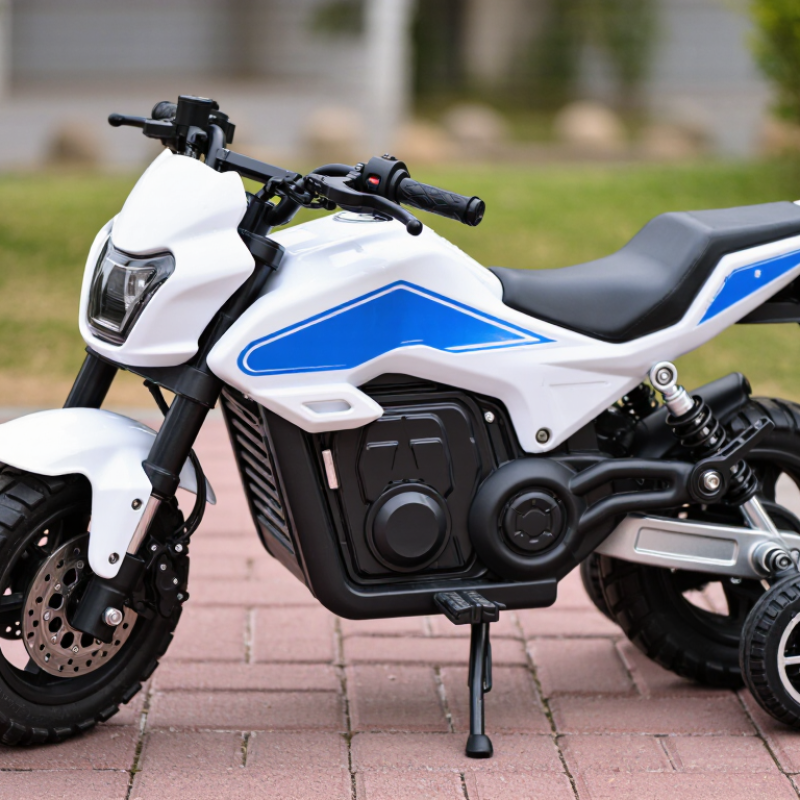
A Battery Operated Kids Motorbike is a small electric ride-on vehicle designed for supervised children’s recreational use. It usually combines a rechargeable battery, low-speed motor, twist or thumb throttle, hand brakes, and two sturdy wheels. Some models resemble miniature trail bikes, while others use training wheels for beginners. The category is not perfectly defined. That matters.
Market research reflects growing interest in electric mobility, but children’s motorbikes are rarely measured as a separate product segment. Grand View Research’s electric bikes market analysis identifies battery-powered mobility as a major growth area, while the U.S. Consumer Product Safety Commission reported approximately 81,800 ATV-related emergency-department injuries in 2022. These figures do not directly describe children’s motorbikes. They do show why product design and supervision deserve careful attention.
Dr. Charles Jennissen, a pediatric emergency physician and ATV safety researcher, has warned, “ATVs are not toys.” His statement offers a useful safety lens for evaluating a Battery Operated Kids Motorbike. Parents should examine the recommended age, rider weight, maximum speed, braking response, battery protection, and charger quality. A helmet, closed shoes, and protective clothing should be part of every ride. Flat, private ground is safer than roads, steep slopes, or crowded public areas.
The details are small. The consequences may not be.
A responsible guide must also admit uncertainty. Battery capacity does not equal safe riding time, and manufacturer claims can vary. Independent testing, clear instructions, adult supervision, and honest skill assessment remain essential. This article explains how these motorbikes work, what features matter, and where excitement should stop.
Definition and Core Features of a Battery-Operated Kids Motorbike
A battery-operated kids motorbike is a small ride-on vehicle powered by a rechargeable battery instead of petrol. Its main purpose is controlled, low-speed riding for children on suitable private surfaces. The core system usually includes a sealed battery pack, electric motor, throttle, brakes, training wheels, and a rigid frame. Some models also use a parent-controlled speed switch.
The electric motor delivers quiet, immediate movement. A rechargeable battery supports short riding sessions, often depending on rider weight, terrain, temperature, and battery age. The International Energy Agency reported more than 14 million electric car sales worldwide in 2023. That growth reflects wider confidence in electric drive systems, but children’s vehicles still require simpler controls and stronger supervision. The U.S. Consumer Product Safety Commission recorded an estimated 231,000 toy-related emergency-department injuries among children under 15 in 2023. Ride-on products deserve careful attention.
Tips: Check the battery label, charger condition, brake response, and wheel stability before every ride. Use a helmet and closed shoes. Choose flat ground away from traffic, stairs, ponds, and loose gravel. A speed limiter is valuable. Battery range is not guaranteed; cold weather can reduce it. No checklist is perfect. Children may also react unpredictably, especially when tired. Follow the product’s age, weight, charging, and maintenance instructions, and review applicable safety guidance such as ASTM F963 where relevant. (Sources: IEA, Global EV Outlook 2024; U.S. CPSC, Toy-Related Deaths and Injuries, Calendar Year 2023.)
How the Electric Motorbike Works
A battery-operated kids motorbike uses stored electrical energy instead of fuel. Its rechargeable battery sends power to a small electric motor through a controller. When a child twists the throttle, the controller regulates the current. The motor then turns the rear wheel through a chain, belt, or direct-drive system. The ride begins quietly.
The battery determines how long the motorbike can operate. A fully charged unit may provide different riding time, depending on the child’s weight, surface, speed, and temperature. Smooth pavement usually requires less power than grass or loose ground. Charging should use the supplied charger on a dry, ventilated surface. Never cover the charger during use.
The controller also affects acceleration. It can limit power, making the first movement gentler for beginners. A small hand lever or pedal normally activates the brake system. Some models use a mechanical brake, while others reduce motor power when the brake is pressed. In practical use, stopping distance still changes with slope and surface. That detail is easy to overlook.
A careful adult should inspect the battery connector, throttle, tires, chain guard, and brakes before each ride. Loose parts can turn a minor problem into a serious one. Protective equipment and direct supervision remain important, even at low speeds. The system is simple, but not flawless. Children may expect instant power, yet cold batteries can respond more slowly. Regular charging, gentle acceleration, and thoughtful maintenance help the motorbike work more predictably.
How a Battery-Operated Kids Motorbike Works
This chart illustrates the energy path in a typical small electric motorbike using a 24-volt, 10-amp-hour battery pack. The battery stores about 240 watt-hours of energy. Some energy is lost in the speed controller, motor, and drivetrain as heat and friction, so the useful energy reaching the wheel is lower.
Main Types and Age-Appropriate Designs
A battery operated kids motorbike is a small electric ride-on vehicle designed for children. It uses a rechargeable battery, a low-powered motor, and simple handlebar controls. Most models fall into three types: three-wheel bikes, balance-style two-wheel bikes, and training-wheel motorcycles. Three-wheel designs offer strong stability for beginners. Two-wheel models feel more realistic but require better balance. Training wheels can help, although they may create false confidence on uneven ground.
Age-appropriate design matters more than appearance. Children aged two to four usually need a slow three-wheel bike with a wide seat and simple push-button control. Children aged four to six may manage training wheels, gentle acceleration, and a slightly higher seat. Older children can use two-wheel designs with adjustable speed settings, hand brakes, and stronger frames. Age ranges are only general guidance. A child’s height, coordination, and attention span should decide the final choice.
Check that both feet can reach the ground comfortably. The handlebar should turn without forcing the child’s shoulders upward. A first ride should happen on flat, dry, private ground, with close adult supervision and suitable protective gear. Battery condition, charging instructions, tire grip, and brake response deserve regular checks. In real use, some children lose interest quickly, while others ride more confidently than expected. I would not judge readiness by age alone. Even a slow motorbike can feel surprisingly fast to a small child.
What Is a Battery Operated Kids Motorbike? - Main Types and Age-Appropriate Designs
| Motorbike Type |
Typical Age Range |
Typical Battery System |
Approximate Speed Range |
Riding Surface |
Main Design Features |
Recommended Use |
| Ride-On Balance Motorbike |
2–4 years |
6-volt rechargeable battery; usually a single low-power motor |
1–2 km/h |
Flat, smooth indoor floors or paved outdoor areas |
Low seat height, wide stabilizing wheels, simple forward and reverse controls, gentle acceleration |
Early introduction to steering, balance, and basic riding control |
| Three-Wheel Electric Motorbike |
3–6 years |
6- or 12-volt rechargeable battery |
2–4 km/h |
Level pavement, patios, driveways, and indoor play areas |
Two rear wheels for stability, low center of gravity, push-button start, wide footrests |
Children who need more stability than a two-wheel design provides |
| Training-Wheel Electric Motorbike |
4–7 years |
12-volt rechargeable battery; commonly one or two motors |
3–6 km/h |
Firm, dry, relatively smooth outdoor surfaces |
Removable or fixed training wheels, moderate seat height, twist-grip or foot-pedal control |
Developing steering confidence before transitioning to a two-wheel model |
| Small Two-Wheel Electric Motorbike |
6–9 years |
12- or 24-volt rechargeable battery |
5–10 km/h |
Private paved paths and smooth, compact outdoor areas |
Two-wheel layout, hand-operated controls, stronger frame, adjustable speed settings on some designs |
Children with established balance and reliable braking awareness |
| Electric Dirt-Style Motorbike |
8–12 years |
24- or 36-volt rechargeable battery |
8–16 km/h |
Private off-road areas with firm soil, grass, or light gravel |
Higher ground clearance, knobby tires, suspension components, hand brakes, protective chain or belt covers |
Supervised recreational riding on suitable private property |
| Advanced Youth Electric Motorbike |
10–14 years |
36- or 48-volt rechargeable battery |
12–25 km/h |
Designated private riding areas and appropriate trails |
More responsive throttle, larger frame, front and rear braking systems, suspension, selectable speed modes |
Older children who can follow safety rules and control a heavier, faster vehicle |
Actual performance depends on the motor, battery capacity, rider weight, terrain, temperature, and charge level. Age ranges are general guidance only; always follow the product’s instructions, local requirements, and adult-supervision recommendations. Protective equipment should include a properly fitted helmet and suitable shoes, with additional protection for hands, knees, and elbows when appropriate.
Safety Features and Responsible Riding Practices
What Is a Battery Operated Kids Motorbike?
A battery operated kids motorbike is a small electric ride-on vehicle designed for controlled, age-appropriate use. Its quiet motor does not make it harmless. Before riding, an adult should check the recommended age, weight limit, speed setting, and surface conditions. A properly fitted helmet is essential. Children also need closed-toe shoes, long trousers, and secure eye protection when dust or small stones are present.
Keep the first rides in a flat, open area away from traffic, pools, stairs, and parked vehicles. An adult should remain close enough to stop the bike quickly. Teach the child to release the throttle before turning, braking, or approaching another person. Slow down near corners. Keep both hands on the handlebars. No passengers. No phone use.
Inspect the brakes, throttle, steering, tires, chain cover, and battery connection before every ride. Loose parts can cause sudden loss of control. Charge the battery in a dry, ventilated place, using the supplied charger. Stop riding during rain, puddles, or poor visibility. I have seen adults focus on speed settings while overlooking loose footwear or uneven ground. That mistake is easy to repeat. Children should also learn a clear stopping signal and a fixed riding boundary. Public roads and shared pathways may have different local restrictions, so an adult should check current rules before choosing a location.
Choosing, Charging, and Maintaining the Motorbike
A battery-operated kids motorbike is a small electric ride-on vehicle designed for supervised recreational use. Choosing one requires more than checking its color or appearance. Match the motorbike to the child’s age, height, weight, and riding experience. Adjustable speed settings, responsive brakes, stable tires, and comfortable footrests matter more than extra decoration. A child should reach the controls easily and keep both feet balanced when stopping. Always read the instruction manual before the first ride.
Tips:
Charge the battery in a cool, dry, ventilated place. Use only the supplied charger or an approved replacement. Check the battery casing, plug, and cable before connecting them. Stop charging if you notice heat, swelling, strange smells, or damaged wires. Never cover the charger while it operates. Do not charge overnight unless the manual specifically permits it. Small details matter.
Maintenance should become part of every riding routine. Wipe away mud before it dries around the wheels, brake controls, and chain area. Inspect tire pressure, loose fasteners, and unusual noises each week. Keep the motorbike dry, but avoid spraying water directly onto electrical parts. Store it with a suitable battery level, following the manual’s storage guidance. Even careful owners sometimes overlook slow tire leaks. That mistake can affect steering and braking. A short inspection before every ride can prevent a small fault from becoming a serious problem. итти
Conclusion
A Battery Operated Kids Motorbike is a child-sized electric ride-on vehicle designed for supervised recreational use. It is powered by a rechargeable battery and an electric motor, allowing children to enjoy smooth, quiet movement without fuel. Key features may include simple handlebar controls, moderate speed settings, stable wheels, a lightweight frame, and safety-oriented designs suited to different ages and skill levels. Some models are intended for beginners, while others offer more advanced controls for older children who have developed better balance and coordination.
Safe riding should always be a priority. Children should wear a properly fitted helmet and suitable protective equipment, ride in a clear, age-appropriate area, and follow responsible riding practices under adult supervision. When choosing a motorbike, caregivers should consider the child’s age, size, experience, weight limit, speed, and battery capacity. The battery should be charged with the correct equipment, kept dry, and stored safely. Regular checks of the tires, brakes, controls, frame, and electrical connections can help maintain reliable performance and extend the motorbike’s useful life.