Battery Operated Kids Tricycle models are becoming more visible in family mobility and ride-on toy markets. However, reliable data rarely separates powered tricycles from wider ride-on categories. Grand View Research and Fortune Business Insights both identify steady growth in children’s ride-on products, supported by rising interest in interactive outdoor play. Circana’s toy industry reporting also shows that parents increasingly compare product value, durability, and developmental benefits before purchasing. These trends matter, but they should not replace careful product evaluation.
A practical 2026 guide must examine more than colorful designs. Battery voltage, charging time, riding duration, motor power, wheel traction, seat support, and maximum user weight directly affect daily use. A small driveway can reveal poor steering quickly. A heavier frame may feel safer, yet it can become difficult to carry upstairs. Some models offer parental remote controls, soft-start acceleration, LED lights, or music systems. These features sound useful. Not all are necessary.
Safety remains the central question. The U.S. Consumer Product Safety Commission’s toy injury reports show why age guidance, supervision, and protective equipment deserve attention. ASTM F963 and EN 71 provide important toy safety frameworks, although certification details vary by market and product category. This guide will compare major Battery Operated Kids Tricycle types through a practical lens, including toddler-focused designs, convertible models, off-road versions, and premium smart-feature options. Specifications can look impressive. Real-world comfort may disagree. Parents should verify current manuals, charger requirements, battery replacement access, and manufacturer support before buying. A polished product is not automatically a dependable one.
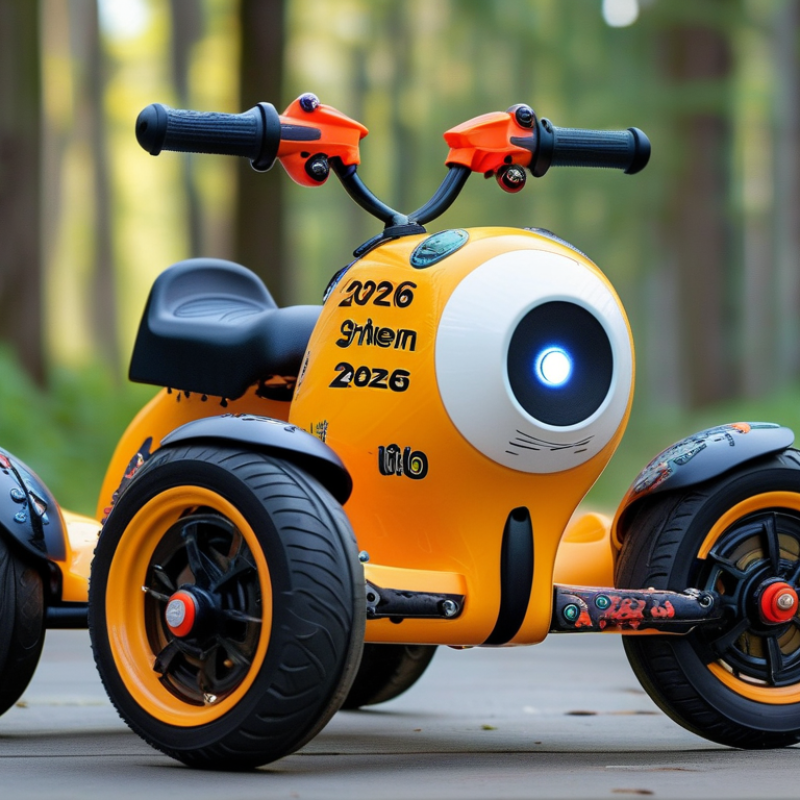
What Is a Battery-Operated Kids’ Tricycle?
A battery-operated kids’ tricycle is a three-wheeled ride-on vehicle powered by a rechargeable battery. It usually combines a small electric motor, pedals, handlebars, and a low-speed control system. The child may steer independently, while an adult controls movement through a remote device on some models. Unlike a standard tricycle, it can move without continuous pedaling. Quiet operation makes it suitable for supervised outdoor play.
Most designs use a 6V, 12V, or 24V battery system, depending on the motor and vehicle size. A lower voltage often supports gentler speeds for younger riders. A stronger system may handle grass better, but it can also increase weight and stopping distance. Check the charger, battery compartment, and wiring before every ride. Loose connections can cause sudden power loss. That detail is easy to overlook.
From a safety perspective, the tricycle should match the child’s age, height, and coordination. Look for stable rear wheels, responsive steering, a secure seat, and a simple power switch. Flat pavement is usually easier than wet grass or uneven paths. An adult should supervise closely, even when a remote control is included. In practical use, children may understand the throttle quickly but misjudge turning space. That learning gap matters. Battery life also varies with rider weight, terrain, temperature, and frequent stops, so advertised playtime should be treated as an estimate.
FAQS
Parent-guided models include push handles, footrests, and controlled steering. Independent models use pedals, buttons, or low-speed motors. Convertible models remove handles or footrests as children develop. Growth changes quickly.
A parent-guided model usually offers better control for toddlers. Look for a stable three-wheel layout, low seat, footrests, and reachable steering control. Adult supervision remains necessary.
No. A single motor often suits flat sidewalks and lighter riders. Dual motors can help on gentle slopes, but extra power may overwhelm younger riders. Slow is better.
Compare voltage, amp-hours, charging time, and stated runtime together. Real riding time may be shorter with heavier children or rough ground. Lithium-ion batteries are lighter, while sealed lead-acid batteries add weight.
Choose gradual acceleration, clear forward and reverse switches, and an easy stop function. Check the brakes, non-slip pedals, guarded moving parts, and seat belt. A seat belt cannot replace supervision.
Check the child’s height, weight, balance, and stopping habits. Confirm the route has suitable surfaces and manageable slopes. Weight limits matter because balance changes as children grow. Our judgment can slip.
Let the battery cool after riding. Use only the supplied charger on a dry, hard surface. Keep clear space around it. Stop charging if it becomes hot, swollen, or smells unusual.
Inspect the tires, steering joint, seat, frame, brake, cable, and battery housing. Look for cracks, loose bolts, or worn wiring near the handlebar. Test steering and braking at walking speed.
Avoid driveways, steep slopes, wet ground, and areas with traffic. Helmets and closed-toe shoes add practical protection. No checklist catches every problem. Keep watching.
Conclusion
A Battery Operated Kids Tricycle is a child-sized three-wheel ride-on vehicle powered by a rechargeable battery, offering an engaging way for children to develop balance, coordination, steering, and basic control skills. In 2026, common types include parent-assisted models, independent-riding tricycles, compact indoor designs, and larger outdoor versions. When comparing options, consider motor power, battery capacity, charging time, speed settings, control methods, braking performance, stability, seat support, and protective safety features.
Choosing the right tricycle depends on the child’s age, height, weight, confidence, and developmental stage. Younger riders may benefit from parental controls, adjustable handles, and lower speeds, while older children may prefer more independent operation. Always inspect the tricycle before use, charge the battery according to the instructions, keep electrical parts dry, and store it safely. Children should ride in suitable areas while wearing protective equipment and remain supervised by a responsible adult.